
Artificial intelligence promises to transform asset management. But while the financial industry remains captivated by ChatGPT and generative AI, the real breakthrough in investment management may lie elsewhere. Roger Bootz of Smart Wealth Asset Management explains why predictive models, intelligent automation and human accountability – rather than language models alone – will shape the future of investing.

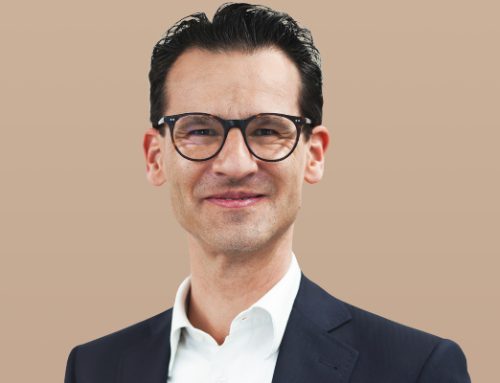
Roger Bootz, Head of Sales, Smart Wealth Asset Management (Image: Smart Wealth)
Artificial intelligence is dominating discussions across the financial industry. Large language models can produce market reports, analyze documents, and answer complex questions within seconds. Their capabilities are impressive, and their potential applications in financial services are considerable.
Yet in asset management, we need to recognize a fundamental distinction: Language models are trained to predict the next word – not the next stock price. Confusing these two capabilities risks overlooking where AI can deliver its greatest value to investors.
Hidden Danger of Spurious Correlations
At Smart Wealth Asset Management, we have spent more than two decades developing a different approach to artificial intelligence. Our investment methodology combines proprietary econometric forecasting models with neural networks. The underlying technology has its roots in industrial applications, including the management of traffic systems and power plants.
The distinction is crucial. Large language models can produce so-called hallucinations – convincing responses that are factually incorrect. In our assessment, based on the research underlying our approach, they also lack the statistical significance required for reliable price forecasting. Our models, by contrast, do not generate narratives. They produce quantitative forecasting signals. However, even sophisticated predictive systems must overcome one of the greatest pitfalls in financial modeling: identifying correlations that appear meaningful but have no genuine economic foundation.
When Evolution Meets Investment Science
This is why our analysis always begins with economic reasoning rather than statistical pattern recognition alone. Which factors genuinely influence the price of a particular security? From approximately 2,000 time series – covering inflation, interest rates, commodities, currencies, valuations and other variables – we select only those for which a plausible economic relationship can be established.
The relevant data are then cleaned and subjected to statistical testing. A genetic algorithm, inspired by the principles of biological evolution, combines suitable variables and ultimately identifies approximately 20 factors with the strongest predictive power for each security. The objective is not simply to discover patterns in historical data, but to develop economically grounded forecasts that can inform investment decisions.
Six Steps from Data to Investment Decisions
Building on this methodology, we have developed a fully automated investment process consisting of six interconnected stages. Each specialized agent performs a clearly defined function and passes its results to the next stage. The process begins with investment universe selection: From approximately 5,000 securities, we identify just over 100 that meet our criteria for economic relevance, diversification, and liquidity.
Our models then analyze the relevant drivers and generate forecasting signals. These signals form the basis for constructing a portfolio designed to maximize expected returns within a predefined risk budget. Portfolio optimization takes place monthly, while risk management operates daily.
When risks increase, the system can automatically sell securities and raise cash allocations. When signals improve, it can reinvest. Trade execution, investment guideline compliance, and reporting are also integrated into the automated process. The result is a systematic investment framework in which forecasting, portfolio construction, and risk management operate as interconnected components rather than isolated functions.
Automation Does Not Eliminate Accountability
The greater the degree of automation, the more important the question of responsibility becomes. I do not subscribe to the idea that machines will eventually take over every aspect of wealth management and make human professionals redundant. As a FINMA-regulated asset manager, we remain accountable for our investment process – regardless of whether an investment decision originates from a human being or an algorithm.
People continue to define the investment universe, risk budgets, portfolio weighting limits and quality standards. Before an order is executed, the system automatically checks compliance with the agreed investment guidelines. After every portfolio rebalancing, actual positions are compared with their intended allocations.
Equally important, every investment decision can be reconstructed. Which factors influenced the forecast? What return expectations did the model generate? Why was a particular security assigned a specific portfolio weight? Which compliance checks were performed before execution? This level of traceability is essential for building trust and meeting the requirements of auditing and regulatory supervision.
The Future Is About Intelligent Division of Labor
In my view, the defining breakthrough in asset management will not come from delegating an ever-growing number of investment decisions to generative language models. It will come from integrating specialized forecasting techniques, automated investment processes, and continuous risk management into a coherent system. AI can make a substantial contribution wherever large volumes of data must be analyzed systematically, economic relationships identified and investment decisions implemented consistently.
There is, however, one decision we should never leave entirely to a machine: determining how much risk a client is willing, and realistically able, to take. Investment objectives, risk budgets and individual constraints must continue to be defined through personal dialogue between clients and their advisers. Equally important, the approval of new investment models must remain firmly in human hands.
The future of asset management is therefore not about replacing people with artificial intelligence. It is about establishing a smarter division of labor: Humans define the objectives, set the rules and assume responsibility – while machines provide the discipline, consistency and efficiency needed to execute investment strategies.
Roger Bootz is Head of Sales at Smart Wealth Asset Management, a Zurich-based investment management firm specializing in proprietary quantitative forecasting models, artificial intelligence and automated investment processes.