

Wars escalate, political tensions rise, and financial markets face a reckoning. But could Europe’s crisis become its greatest opportunity? In his latest WealthSummit opinion piece, Beat Wittmann explains why France’s mounting debt troubles, social unrest, and capital markets’ discipline could force Europe to reinvent itself, while creating exceptional opportunities for investors.

Protests in the streets (Image: Ian Hutchinson, Unsplash)
An eclectic mix of chaos and war, booms and busts, hope and betrayal, coercion and mercantilism, treason and heroism has so far marked this year. To an extraordinary extent, reality has beaten fiction.
I expect the coming weeks and months to force politicians’ hands, as the power of the streets and the discipline imposed by capital markets force overdue policy decisions. Against this backdrop, two capital markets will be decisive.
The first is the US equity market, which is trading at all-time highs even as Donald Trump’s reckless and unwinnable war against Iran drives up the cost of living and oil prices, pushing interest rates to their highest levels since the 2000s.
The second, and arguably more vulnerable, pressure point in global capital markets is the French government bond market. French sovereign yields and credit spreads have widened sharply relative to other eurozone markets, reflecting the country’s unsustainable fiscal trajectory and nationwide violent street protests.
Elections Amid Poisoned Politics
Amid the escalation of international conflict and disorientation, we are approaching a series of consequential elections in Brazil, Israel, the US, Spain and France. Across these countries, political discourse is poisoned, incumbent leaders have failed to deliver, and challengers are emerging from the other ends of the political spectrum.
The US midterm elections are the most important case in point. Despite the overwhelming news and political noise, we would expect little fundamental change in geopolitics. If Trump loses control of majorities in both chambers of Congress, he is set to escalate his coercive and destructive trade and foreign policies in an attempt to compensate for being constrained and potentially paralyzed domestically by investigations and possible impeachment proceedings. Executive orders would become an indispensable instrument.
Political Capacity Versus Political Will
In today’s turbulent and transformative geopolitical environment, the outcome ultimately depends on what individual leaders are both willing and able to do.
Trump wants to side with Russia against Ukraine and Europe, and he has the power to do so. Vladimir Putin wants to intensify his attacks on Ukraine’s civilian infrastructure, and he has done so by raining missiles on cities and critical infrastructure. Xi Jinping wants simultaneously to support Russia’s war against Ukraine and Europe and to export ever greater volumes of goods to Europe. He has done so as well.
We must recognise that we have entered an era of hard-power politics and might makes right. In this world, agreements, contracts and security guarantees are no longer reliably enforceable through law or multilateral rules and are therefore of no practical value.
Europe’s fundamental strength, and its greatest opportunity, is that it retains the institutional, demographic, financial, industrial and human-capital resources necessary to determine its own future.
Even within NATO, the balance of dependencies is more nuanced than is often acknowledged. The US needs NATO over the long term to operate and project power globally, while Europe needs NATO in the short term as it closes critical gaps in its defence capabilities.
What Europe has lacked so far is the political will to translate its resources into genuine sovereignty across defence, technology and capital. This requires overcoming costly and ineffective fragmentation, challenging entrenched national interests and standing its ground credibly and effectively in a world dominated by predatory behavior from the US, Russia and China.
We nevertheless expect mounting external pressures and exogenous shocks, particularly those arising from the unfolding French debt crisis and the reaction of capital markets, to force European leaders’ hands. In 2027, these pressures are expected to lead to decisive advances in European integration across capital markets, defence and energy.
Trump, Xi and Putin: The Power Triangle
To assess the geopolitical, economic and capital-market outlook, including its opportunities, fault lines and risks, we must understand how the principal actors, the US, China, Russia and Europe, perceive their respective positions, opportunities and vulnerabilities.
Trump thinks and acts like a narcissistic, self-enriching dealmaker who seeks a dominant global position, including control over what he regards as America’s near abroad, notably Canada and Greenland. Within this worldview, he sees Xi and Putin as his only true peers and respects their ambitions regarding Taiwan and Ukraine.
This mindset has led him to throw his weight behind Russia. He has invited Putin to a G20 meeting without informing European allies and may meet Putin and Xi at the forthcoming APEC summit in Shenzhen to negotiate an end to the war on terms favourable to Russia, without Ukraine or Europe at the table, while continuing to berate Volodymyr Zelenskyy.
Xi: Strategic Discipline and Economic Leverage
Xi Jinping is convening China’s senior Communist Party leadership this week to enforce discipline and party unity ahead of next year’s party congress.
Beijing views Europe as weak and in decline, blaming it for the failure to end the war in Ukraine against Xi’s close friend Putin. The Chinese leader considers his relationship with Trump to be good and values the US president’s pragmatism.
Meanwhile, relations between China and Japan have deteriorated markedly under Japan’s strong, nationalist Prime Minister, Sanae Takaichi, who is rightly seeking to strengthen her country’s sovereignty in defence.
Putin: A Temporary Advantage That Will Encourage Miscalculation
With support from both China and the US, Putin finds himself in a temporarily advantageous position. This will encourage further miscalculations regarding Europe’s resolve to rearm and continue supporting Ukraine.
Importantly, the US war of choice against Iran has delivered substantial financial and military benefits to Russia. Higher oil prices have provided a windfall for Moscow’s stretched public finances, while US air-defence interceptors and missiles currently deployed in the Middle East are unavailable to defend Ukraine against intensifying Russian aerial attacks.
Europe’s Winter of Discontent
Since Russia’s invasion of Ukraine in 2022 and Trump’s re-election in 2024, Europe has learnt, often through painful experience, how dangerously exposed it remains to external shocks.
Yet the pressure has not, so far, been sufficient to overcome fragmentation, protectionist reflexes and the entrenched interests of national capitals. Europe has still not done enough to strengthen its sovereignty, competitiveness and resilience.
We expect the evolving French debt crisis, together with protests and riots in countries including France, Belgium, Italy, Greece, Spain and Portugal, to provide the catalyst for overdue institutional reforms outlined in the Draghi report.
The underlying causes of social unrest are becoming apparent: a deteriorating cost-of-living situation, chronic underinvestment in infrastructure, inadequate educational opportunities and a shortage of affordable housing. These countries share a difficult structural economic outlook and high levels of public indebtedness, making it politically painful to finance the public investment they urgently need.
The frustration of students and Generation Z more broadly is understandable. Many fear that they will not enjoy the same opportunities for employment, career progression and economic advancement as their parents’ generation.
At the same time, the urgent need for massive and timely European rearmament, driven by the persistent and existential Russian threat to Ukraine and the wider European security architecture, is placing an additional and substantial burden on public finances.
For decades, incumbent centrist governments across Europe have failed to deliver the necessary reforms and investment. Instead, they have consumed the post-Cold War peace dividend, financed an ever-expanding welfare state and subsidised their respective constituencies, from farmers on the political right to trade unions on the left.
The substance of what Europe must do to restore economic growth, global competitiveness, social cohesion and collective security is hardly a mystery. EU and ECB reports, policy papers and strategic assessments have repeatedly set out the roadmap for reversing European economic stagnation and closing the productivity gap.
The responsibility rests with elected European leaders to implement these proposals and deliver results. The essential European policy priorities are clear:
- Establish a savings and investment union to mobilise Europe’s domestic savings and channel them into productive investment.
- Rearm for deterrence and military readiness, closing critical capability gaps and strengthening Europe’s defence-industrial base.
- Invest in infrastructure, including transport, energy, communications, technology, research and development, and education.
- Create a competitive and genuinely integrated single market, particularly for corporations and small and medium-sized enterprises, while incentivizing entrepreneurship and innovation.
- Cut red tape and subsidies, improve resource allocation and make labour markets more flexible.
France’s Debt Crisis: Europe’s Turning Point
Jean Monnet, the French economist and diplomat widely recognised as one of the founding fathers of the EU, famously observed that Europe would be forged in crises and would be the sum of the solutions adopted in response to them.
We believe Europe has reached another such moment. The unfolding French debt crisis will trigger the implementation of a long-delayed capital markets union, initially through a coalition of six willing countries, the E6, and potentially before the French presidential election in April 2027.
Bond markets have already begun to lead the way. US and G7 government bond yields have risen to levels not seen in decades, while France has emerged as the eurozone’s principal sovereign vulnerability. We expect the associated political, economic and market turmoil to intensify further.
In my assessment, Europe represents a stronger sovereign credit proposition than the US. Crucially, unlike the US, Europe does not depend on external financing: European savers are available to finance European governments’ borrowing requirements. Both Europe and the US, however, are pursuing fiscal trajectories that are unsustainable over the long term.
France: Credit Spread Risk, Not Systemic Risk
How should we interpret the developments in France, and do they constitute a systemic risk?
We must return to fundamentals. The eurozone is a monetary and financial system in which sovereign debt markets are interconnected and systemic risks cannot be assessed in isolation. My investment strategy over several decades has consistently been to buy the widest sovereign spread within the eurozone because I have strong confidence in the resilience and continuity of the system.
That was my position during the Greek debt crisis in 2011, and it remains my position today regarding French OATs, the French government’s benchmark bonds.
I regard French OATs as the most attractive investment opportunity in the eurozone at present because I believe the eurozone will endure. That does not mean the path will be smooth. I expect high volatility and painful political and market turmoil over the coming weeks and months, leading up to the French elections.
Capital-market participants, including hedge funds, have a substantial window of opportunity to profit from that volatility. Street protests will add to the pressure, while politicians on both the far right and the far left continue to entertain what I regard as misguided, Argentina-style routes to economic salvation.
I believe the widening French sovereign spread presents a unique investment opportunity. The crucial question is when to enter and at what price. In my view, the moment of maximum opportunity may arrive when the prospect and risk of a French sovereign default become prominent subjects of coverage in publications such as «The Economist» or «Der Spiegel».
Banking on European Integration
These developments also have implications for European banks, which have been among investors’ preferred trades. We have previously discussed the attractiveness of the sector, but that trade is beginning to come under pressure, as illustrated by the sharp declines in the largest French banks.
Our fundamental view of European banks remains positive. Higher yields have supported bank profitability, while the potential for cross-border consolidation remains substantial. The proposed Unicredit-Commerzbank transaction will happen and could trigger further deals across the sector.
At the same time, the French sovereign debt crisis is likely to intensify as the elections approach. We believe this pressure could help drive a renewed push towards a capital markets union in the first quarter of 2027. A pre-emptive ECB intervention to support France, however, remains highly unlikely.
Ultimately, we expect the French debt crisis and the associated social unrest to provide the impetus for a capital markets union among willing European countries in 2027, before eurosceptic and Russia-friendly Marine Le Pen potentially assumes the French presidency.
Markets in a Fragmenting World
The outlook for the coming months across geopolitics, the global economy and capital markets points towards further escalation on both the Ukraine and Iran fronts. We expect global capital markets to adjust to these emerging realities.
Our investment stance remains unchanged. Global equities face a substantial risk of an overdue correction, but equities remain our preferred asset class over the medium to long term.
In fixed income and currencies, we continue to recommend that investors remain invested within their own geographic regions. Within the eurozone, investors should favour the markets offering the widest sovereign spreads. For European investors, we see no compelling reason to invest in US fixed income.
We reiterate our view that geoeconomic fragmentation and financial repression will dominate geopolitics, the global economy and capital markets in 2027 and beyond, with the US, China and Europe forming the principal geographic centers of this transformation.
The Future in Plain Sight
Europe remains exposed to Russia militarily and to both the US and China through the weaponisation of economic dependencies. These extend from energy and critical minerals to artificial intelligence and technology, tariffs and trade, supply chains and financial infrastructure.
Crucially, Europe will need to rely on coalitions of the willing and majority voting in defence and finance, rather than allowing unanimity requirements to obstruct or delay essential decisions.
For a long time, nothing happens, until everything happens! We must be prepared to think the unthinkable and resist the dangers of groupthink as we navigate an unprecedented period of transformation across societies, economies and technology.
Keep watching, and think independently. Most major developments are written on the wall, but recognizing them requires both the ability and the willingness to see what is coming.
Everyone could read Putin’s historical pamphlet from the summer of 2021 outlining his view of Ukraine’s historical belonging and future. Equally, China’s strategic plans from 2015 to 2025 have made its ambitions clear, including its determination to become a global leader in rare-earth supply chains, electric vehicles and solar technologies. The same applies to the US National Security Strategy document of November 2025.
These documents were publicly available to anyone willing to read them. The challenge was not a lack of information, but the willingness to draw the appropriate conclusions and then act upon them.
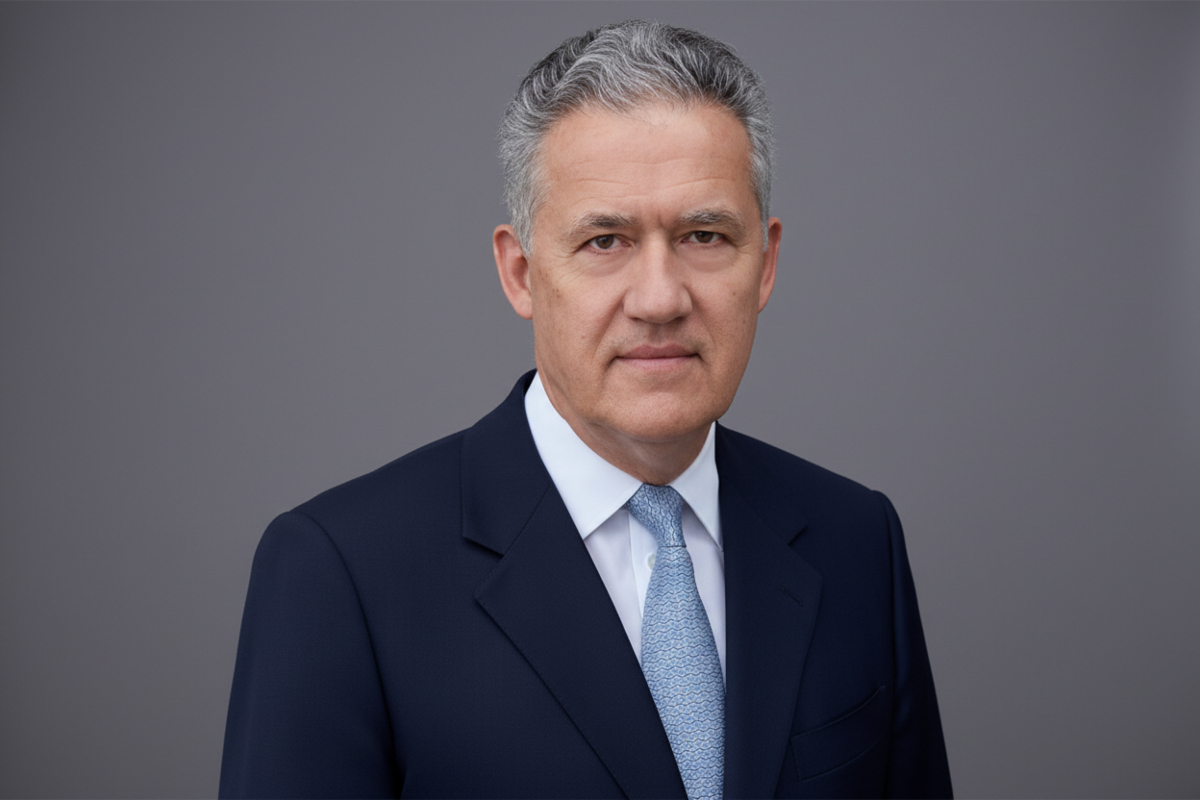
Beat Wittmann is the Chairman and a Partner at Porta Advisors, Zurich, and Chief Investment Strategist at Bauval Investment Partners, Geneva. He is also a co-founder and a member of the board of trustees of the Sovereign Europe Forum.