


Louise Street (Image: World Gold Council)
Gold Is Losing Its Shine – So Why Are the Smart Money Investors Still Buying?
Gold has suffered a spectacular fall from its record highs. Yet central banks and institutional investors continue accumulating the precious metal. I believe this apparent contradiction reveals something far more significant than another market correction.
Personally, I see a growing unease about the foundations of the global financial system. Gold approached $5,400 an ounce in January before retreating to $3,936 in early November. For private investors, that is hardly reassuring. For institutional investors, however, the correction appears to have done little to undermine gold’s strategic appeal.
According to the World Gold Council’s latest figures, central banks purchased 321 tonnes in the third quarter, 42% more than a year earlier. Gold-backed ETFs attracted another 211 tonnes, while demand for bars and coins declined by 19%.
Vote of No Confidence?
What strikes me is the widening gap between institutional conviction and private investor caution. In an interview with Geneva-based «Allnews», Louise Street of the World Gold Council attributes institutional demand partly to concerns about fiscal sustainability, persistent inflation and geopolitical uncertainty.
I see a deeper message. When central banks, particularly those of Poland and China, accumulate gold, they are not necessarily betting on higher prices. They are seeking diversification from financial and political risks that conventional reserves cannot entirely eliminate.
Paradox of Safe-Haven Investing
Yet gold’s reputation as the ultimate safe haven deserves scrutiny. During recent equity-market turbulence, gold also declined. Investors needing liquidity sometimes sell precisely those assets they consider safest. Protection against long-term uncertainty does not guarantee protection against short-term losses.
For private banks, this distinction matters enormously. Gold generates no income, carries an opportunity cost and can experience substantial volatility. Its strategic value must therefore be assessed within the broader portfolio, not through simplistic price forecasts.
Preserving National Wealth
My conclusion? Gold’s most revealing signal may not be its price, but the identity of its buyers. When institutions responsible for preserving national wealth keep accumulating an asset that pays no interest, perhaps the more interesting question is not why they trust gold – but what they increasingly distrust elsewhere.

Wealthy Asian family (Image: Adobe Stock)
Asia’s Wealthy Families Have a Succession Problem Nobody Wants to Talk About
Asia’s wealthy families are increasingly talking about passing their fortunes to the next generation. Yet remarkably few are prepared to relinquish control. I believe this contradiction exposes one of the greatest risks facing private banking.
My opinion: wealth may survive market crashes, but not necessarily the families that own it. Jimmy Lee, Julius Baer’s Asia head, recently told «The Straits Times» that succession planning and intergenerational wealth transfer have become central priorities for affluent families – as we already reported last week. That sounds encouraging. But the numbers tell a decidedly less reassuring story, other sources reveal.
According to the DBS Asian Family Office Almanac 2026, surveying more than 200 family offices across Asia, Europe and the Middle East, 43 percent have not involved the next generation in wealth planning. Just 1 percent allow younger family members to lead the process. Worse, more than 85 percent lack a formal, regularly tested business continuity plan.
Illusion of Preparedness
The findings become even more revealing when compared with UOB’s research: 37 percent of founders retain sole authority over wealth decisions, while 28 percent keep their wills undisclosed.
What strikes me is not the absence of succession ambitions, but the reluctance to translate them into action. Many Asian fortunes were created by extraordinary entrepreneurs whose instinct to maintain control remains deeply ingrained. Unfortunately, the qualities that build wealth can become liabilities when transferring it.
Wake-Up Call for Private Banks
For private banks in Singapore and Switzerland, I see an uncomfortable challenge. Advising wealthy families on investments is relatively straightforward. Persuading powerful founders to share authority, establish governance structures and prepare their heirs for responsibility is considerably harder.
Yet this is precisely where private banking must demonstrate its value beyond portfolio performance. The next generation needs more than financial education. It needs meaningful involvement, decision-making authority and the freedom to challenge established family priorities.
My conclusion is simple: the greatest threat to Asia’s family fortunes may not be volatile markets, geopolitics or taxation. It may be the unwillingness of those who created the wealth to let go. After all, what is the point of preserving a fortune if nobody is properly prepared to inherit it?
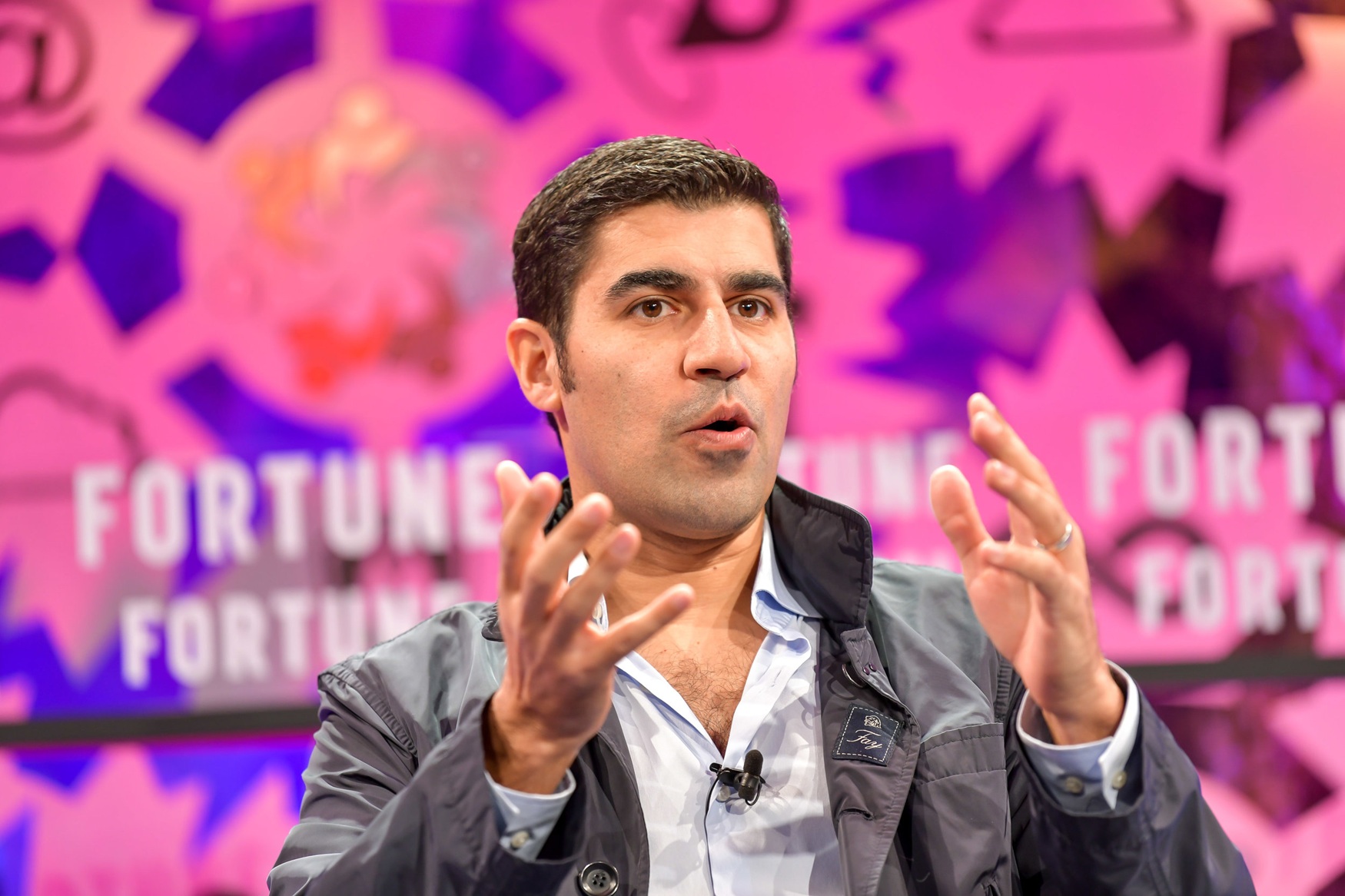
Parag Khanna (Image: media image)
The West Talks About Deglobalization – Asia Is Busy Proving It Wrong
While Western politicians erect trade barriers and warn of economic fragmentation, Asia is quietly becoming more interconnected than ever.
I believe this is one of the most consequential shifts in the global economy – and one that investors, private banks and wealth managers cannot afford to underestimate.
Globalization, we are repeatedly told, is retreating. Yet the latest DHL Globalization Tracker, produced with New York University’s Stern School of Business, suggests otherwise. Despite tariffs, geopolitical tensions and disrupted trade routes, global interconnectedness reached a record 25.8 percent in 2025.
Even more striking is the role of artificial intelligence. AI-related goods accounted for 42 percent of global merchandise trade growth in 2025, rising to an extraordinary 76 percent in the first quarter of 2026. Technology, it seems, is connecting economies faster than politics can separate them.
Asia Is Rewriting the Map
Global strategist Parag Khanna, author of «The Future Is Asian», has long argued that Asia’s internal integration would reshape the global economy. The latest figures lend considerable weight to his thesis.
Trade across East Asia and the Pacific surged 24 percent during the first five months of 2026, while the region’s intra-regional trade share increased from 57 percent to 60 percent. Meanwhile, US-China trade has fallen from 3.5 percent of global trade in 2015 to just 1.6 percent. Remarkably, America’s closest allies have largely maintained their economic ties with China.
What Private Banks Should Understand
For me, the implications extend well beyond trade. Economic integration creates investment opportunities, generates entrepreneurial fortunes and ultimately reshapes where wealth is accumulated, managed and transferred.
Singapore and Switzerland offer an interesting contrast. Switzerland remains deeply embedded in European and global capital markets, while Singapore is positioned within Asia’s increasingly integrated economic network. Both financial centres can benefit, but private banks must understand where tomorrow’s wealth is being created.
Globalization Is Not Disappearing
There is, however, a caveat: AI-driven trade growth is unusually concentrated, making it vulnerable to a technology investment slowdown. My conclusion? Globalization is not disappearing. Its geography is changing. The greatest strategic mistake would be to mistake Western political rhetoric for global economic reality.

Hong Kong (Image: Adobe Stock)
The Next Battle Between Financial Centres Won’t Be About Money
Forget tax advantages, regulatory frameworks and financial infrastructure. The next great contest between Hong Kong, Singapore and Switzerland will be fought over something far less tangible: human talent.
I believe many financial institutions still underestimate what is at stake. In a thought-provoking commentary published by the University of Hong Kong, Huo Xuewen, former Chairman of Bank of Beijing, argues that talent is the operating system of a financial centre. Institutions, capital and infrastructure provide the hardware. Without exceptional people, however, even the most sophisticated financial ecosystem cannot function effectively.
I find this analogy particularly compelling. Financial centres have traditionally competed through regulation, taxation, market access and political stability. These advantages remain important, but they are increasingly insufficient. What ultimately distinguishes a successful financial hub is its ability to attract, develop and retain people who combine financial expertise, technological competence and international experience.
Artificial Intelligence Changes Everything
Huo identifies artificial intelligence as a fundamental force reshaping financial services. Tomorrow’s professionals must navigate technology, complex regulatory environments and cross-border markets simultaneously. Traditional banking expertise alone will no longer guarantee success.
This raises an uncomfortable question for private banks. While institutions invest billions in digital transformation, are they investing enough in transforming their workforce? I suspect many still treat talent development as a human-resources responsibility rather than a strategic priority.
Lesson for Switzerland and Singapore
Hong Kong’s challenge is particularly revealing. Its financial strength rests on connecting China with international markets. Singapore has developed its own formidable position as a gateway to Southeast Asia, while Switzerland draws on its longstanding expertise in international wealth management.
Yet none can afford complacency. Competitive salaries attract professionals, but intellectual freedom, career opportunities, international openness and quality of life help retain them.
For me, the conclusion extends beyond competition between cities. As AI increasingly commoditizes financial products and services, human judgement, relationships and trust may become even more valuable. The financial centre of tomorrow will not necessarily be where capital enjoys the greatest advantages. It will be where the most capable people choose to build their futures.

Generic image of a brain (Image: Adobe Stock)
What If AI Is the Next Trigger for a Financial Crisis?
Artificial intelligence was supposed to propel the global economy into a new era of prosperity. Instead, I increasingly wonder whether the extraordinary investment boom surrounding AI could become the catalyst for the next financial crisis. The warning signs are becoming difficult to ignore.
According to a «Reuters» analysis, global markets are confronting an increasingly dangerous combination of soaring government debt, persistent inflation, geopolitical tensions and unprecedented AI investment.
The numbers are staggering. America’s largest technology companies are expected to invest approximately $900 billion in AI infrastructure this year, rising to $1.2 trillion in 2027, according to Danske Bank estimates. Meanwhile, technology and AI-related stocks account for more than 40 percent of the S&P 500. In October alone, over $2 trillion was wiped from the Nasdaq 100.
When Optimism Becomes a Vulnerability
What concerns me is not artificial intelligence itself. Its transformative potential is undeniable. The danger lies in the extraordinary concentration of capital, expectations and increasingly debt-financed investment in a relatively small group of companies.
Former Goldman Sachs economist Jim O’Neill warns that persistently high interest rates could expose vulnerabilities in AI financing. Sheila Bair, who led America’s Federal Deposit Insurance Corporation during the 2008 crisis, also sees troubling parallels with earlier episodes of excessive leverage.
Next Crisis Could Be Different
Global debt now exceeds $350 trillion, according to the Institute of International Finance. Governments therefore have considerably less room to respond to another major economic shock.
For private banks and wealth managers, I see an uncomfortable dilemma. Avoiding AI entirely risks missing a technological revolution. Embracing it indiscriminately could expose clients to extraordinary concentration risks, even through supposedly diversified index portfolios.
Almost Flawless Transformation
Strong corporate earnings provide some reassurance. But impressive profits today do not automatically justify unlimited investment in tomorrow’s infrastructure. My conclusion? The greatest danger may not be that AI fails to transform the economy. It is that financial markets have already priced in an almost flawless transformation.
History suggests that financial crises rarely begin when investors stop believing in the future. They begin when too many investors believe in exactly the same future.