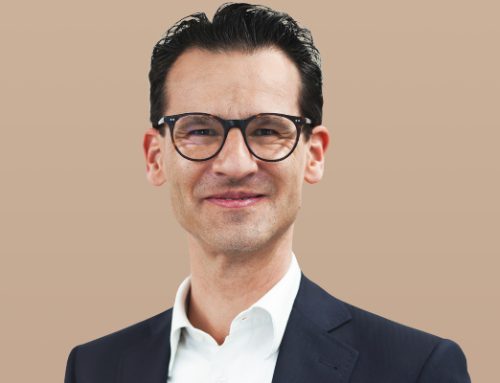

Swiss banks were pioneers in alternative investments. Yet their early lead now risks becoming a competitive disadvantage. Outdated processes and insufficient technology are holding back growth. Timo Paul, Head of Switzerland at London-based private markets specialist Titanbay, explains in an interview with WealthSummit why Swiss banks must act now.
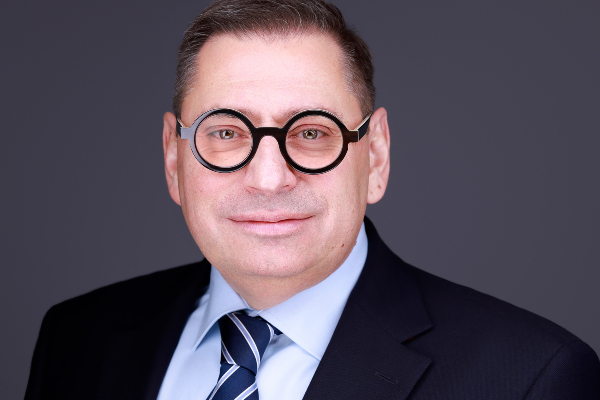
Timo Paul, Head of Switzerland at Titanbay (Image: courtesy of Titanbay)
Timo Paul, what prompted you to join Titanbay, and what is the company’s business model?
After more than two decades at Credit Suisse, UBS, and asset manager Natixis Investment Managers, working closely with private banks, wealth managers, and institutional clients in Switzerland, I kept encountering the same problem: Banks want to offer private markets investments, but their operating models simply aren’t designed to accommodate them.
Titanbay addresses precisely that challenge. That is what attracted me to the company.
So how does Titanbay solve this problem in practice?
Titanbay structures, launches, and manages private markets funds for its clients – providing an end-to-end solution powered by technology we have developed in-house. Our funds are managed by our own Alternative Investment Fund Manager (AIFM), Titanbay Ireland Limited, which is authorized by the Central Bank of Ireland.
Our technology handles the operational processes throughout a fund’s lifecycle – from structuring and onboarding to trading and reporting. This enables asset managers to launch and operate funds at scale, while allowing wealth managers to subscribe to and trade those funds through the systems they already use.
How does a London-based company convince Swiss banks to put their trust in it?
The Swiss way: Through patience, trust and substance. Three factors are particularly important.
First, regulation. As mentioned, Titanbay retains regulatory responsibility in-house rather than outsourcing it. Second, neutrality. We do not distribute funds, so we never compete with a bank’s product offering or interfere with its client relationships. Third, local presence. I am based here, and Titanbay is committed to Switzerland for the long term. We are not simply a London team flying in for occasional meetings.
«We want to be the company Swiss bankers recommend to each other – not the company their clients have already heard of»
Swiss banks prefer working with people they know and who understand how they operate. That is precisely my role.
How do you build a strong brand and establish a sustainable market position while operating largely behind the scenes?
Being invisible is precisely the point. A private bank’s clients should see only their bank. We operate behind the scenes, allowing banks to remain front and centre under their own brands while retaining full ownership of their client relationships. That also determines where we concentrate our brand-building efforts. Our target audience consists of decision-makers responsible for products, operations and investment platforms at banks and wealth management firms.
In Switzerland, trust is built through personal relationships – through conversations, recommendations and consistently demonstrating that we understand the realities of our clients’ businesses.
Our market position becomes established when we are integrated into a bank’s daily operations. Once private markets transactions run seamlessly through a bank’s existing systems, we become a long-term partner rather than another vendor whose services need to be reassessed every year.
What is your long-term strategy?
Our strategy is to become the specialist in our field. We have no ambition to be everything to every bank. Instead, we focus on one thing: the operational infrastructure behind private markets – delivered to the standards Swiss banks expect.
We are building relationships one bank at a time, establishing a lasting presence in Switzerland rather than pursuing a rapid market entry.
«We operate behind a bank’s existing systems rather than alongside them»
As private markets become a permanent component of Swiss investment portfolios, we want to be the company banks already trust to manage the operational processes behind those investments.
What sets Titanbay apart from its international competitors, and why should Swiss banks choose your company?
Most providers entering the Swiss market bring yet another portal – a selection of funds and another screen that relationship managers must log into.
But the operational burden remains with the bank: checking suitability, monitoring lock-up periods and reconciling positions for individual clients. Other providers design a fund structure and then hand over its operation to a chain of separate service providers. Our approach is fundamentally different. We provide an integrated solution that goes considerably further.
We operate behind a bank’s existing systems rather than alongside them. The bank selects the funds, not us. We do not distribute funds, so we never compete with its product offering. And instead of entering into separate distribution agreements with individual fund managers, the bank signs a single agreement with Titanbay.
Crucially, one company takes responsibility for the entire process. Our in-house AIFM works hand in hand with our technology and operations teams.
Where do you see the biggest weaknesses in the Swiss banking landscape?
Ironically, Switzerland’s greatest weakness stems from the fact that it was ahead of the curve.
«Private markets are becoming an integral part of investment portfolios»
Swiss private banks were offering alternative investments to their most affluent clients long before much of Europe had entered the market. But they did so as a bespoke service – carefully selected funds, manually processed transactions and a relatively small circle of clients. That model worked. As a result, there was never much pressure to invest in the infrastructure needed to support it.
What has changed?
The market has evolved. Private markets are becoming an integral part of investment portfolios, extending well beyond the wealthiest clients. Meanwhile, banks in other markets are building the infrastructure required to offer these investments at scale.
Many Swiss banks, however, still handle private markets outside their core systems rather than integrating them into their existing infrastructure. That is holding back growth. If every transaction requires manual checks, banks cannot extend private markets access to more clients without adding staff and increasing operational risks.
Switzerland has the expertise, the client base and the demand. What it has not yet done sufficiently is invest in the underlying infrastructure.
Can Switzerland reinvent itself and defend its position as a leading global wealth management hub against increasingly ambitious rivals such as Singapore, Dubai and London?
Yes, because its fundamental strengths are difficult to replicate: stability, discretion, deep expertise and relationships built over generations. These qualities remain enormously important to wealthy families.
But those strengths must be aligned with what clients expect today – and that increasingly includes access to private markets as a permanent part of their investment portfolios.
«Swiss banks need to act decisively in areas where clients now expect seamless execution»
Other financial centres are moving quickly. Switzerland does not need to compete by making the most noise. It needs to continue earning its reputation, client by client. If it succeeds, I am convinced it will remain the benchmark for global wealth management.
Is Swiss banks’ technological conservatism still a strength, or is it becoming a competitive disadvantage?
Both. Caution is a strength when it protects clients. Swiss banks are right not to chase every new trend. But caution becomes a disadvantage when essential processes are still handled manually. In private markets, the real risks often lie in those manual processes – a missed suitability check or an overlooked lock-up restriction.
The question is not whether banks should change, but where they should focus that change. Swiss banks need to act decisively in areas where clients now expect seamless execution, and private markets are one of them. Prudence and efficiency are not mutually exclusive.
What results would you like to be measured against in twelve months?
Three things. First, Swiss banks should be using Titanbay to handle private markets transactions as part of their daily operations – through the systems they already use, with suitability and lock-up checks carried out before every order.
Second, those banks should be able to offer private markets investments to a much broader client base, well beyond their wealthiest customers, because the operational burden has been removed.
Third, Titanbay should become a recognised name among the executives responsible for products and operations at Swiss banks and wealth management firms.
And if, a year from now, a Head of Products in Zurich or Geneva hears the words «private markets operations» and immediately thinks of Titanbay, we will have done our job.
Timo Paul is Head of Switzerland at Titanbay, the London-based private markets specialist. He leads the company’s Swiss operations, working closely with private banks and wealth managers to develop, enhance, and scale their private markets offerings. He joined Titanbay in August 2025, bringing more than two decades of experience in the Swiss asset and wealth management industry. He also chairs Titanbay’s high-profile Swiss Advisory Board, which brings together prominent figures from the Swiss financial industry.
London-headquartered Titanbay is one of Europe’s fastest-growing providers of private markets infrastructure. The company empowers asset managers and distribution partners to streamline access to private markets investments, simplify complex operational processes, and deliver scalable investment solutions to a broader client base.