
Image: Adobe Stock
Could Switzerland Lose UBS Without a Single Shot Being Fired?
The greatest threat to Switzerland’s financial centre may no longer come from another banking crisis. It could come from the political response to the last one.
I find it remarkable that a potential takeover of UBS by Morgan Stanley is being seriously analysed at all. According to news wire «Reuters Breakingviews», such a transaction could cost $138 billion, making it the largest banking acquisition in history. Yet the financial logic is surprisingly weak.
Marriage That Doesn’t Add Up
«Breakingviews» calculates potential cost savings exceeding $10 billion. Impressive, until lost revenues and departing clients are considered. Morgan Stanley’s return on invested capital could fall below 13 percent, against an expected 24 percent return on tangible equity next year.
The real story, however, lies in Bern. Switzerland’s upper house has backed capital requirements that UBS estimates would demand an additional $16 billion. The intention is understandable: prevent another Credit Suisse disaster. But I wonder whether politicians fully appreciate the unintended consequences.
The Price of Swiss Exceptionalism
UBS could conceivably become a buyer rather than a target, acquiring a smaller American bank and potentially creating a route to relocate its headquarters. That possibility deserves considerably more attention than takeover speculation.
Switzerland wants a globally competitive banking champion while imposing requirements that its champion considers internationally disproportionate. There is a legitimate case for tougher safeguards. But regulation must protect the financial centre without progressively undermining its foundations.
Better Strategic Options
My concern is not that Morgan Stanley will buy UBS tomorrow. It is that Switzerland may eventually discover that its most important bank has better strategic options elsewhere. And that would be a remarkably expensive lesson in unintended consequences.
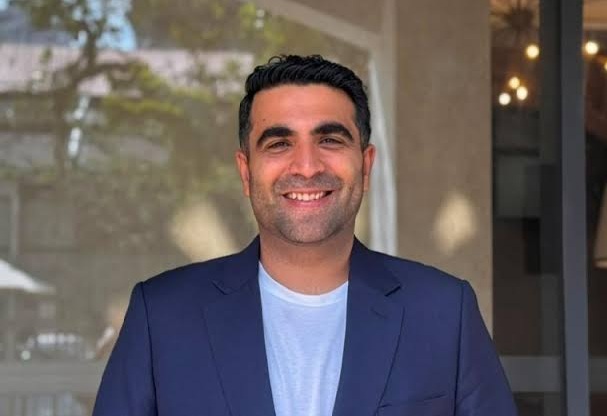
Image: Multipolitan
Why Are Private Banks Still Thinking Locally?
The world’s wealthy are becoming increasingly mobile. Yet private banking remains remarkably anchored to national borders. I believe this growing disconnect could become one of the industry’s most underestimated strategic challenges.
Consider Singapore-based Multipolitan. As reported by «The Asian Banker», the company has raised $2 million in seed funding at a $25 million pre-money valuation, led by EmergentX. Its private-client business has already generated more than $4 million in net revenue in under two years.
Wealth Has Become a Moving Target
Multipolitan is developing a platform combining passports, visas, residency requirements and travel information. Its free consumer app is scheduled for December 2026, with a premium version planned for 2027. Expansion into Manila will strengthen its technology capabilities.
What interests me is not the relatively modest funding round. It is the business model. Multipolitan recognises that affluent families increasingly face challenges extending far beyond portfolio management: immigration, residence, succession and navigating multiple jurisdictions. These are precisely the complexities that shape where wealth is held, invested and transferred.
Who Really Owns the Client Relationship?
For private banks in Switzerland and Singapore, this raises an uncomfortable question. If clients increasingly organise their lives internationally, why should their principal financial adviser remain focused primarily on managing assets?
I see an opportunity for institutions that connect investment expertise with international mobility, tax and succession advice. But there is also a competitive threat: technology companies could establish relationships with wealthy families long before those families select a private bank.
Beyond Traditional Private Banking
Multipolitan’s commercial success is far from assured. Its valuation is not proof of a scalable business, and regulatory complexity cannot simply be programmed away.
Nevertheless, its ambitions reveal something important about the future of wealth management. The next battle for wealthy clients may not begin with an investment proposal. It may begin with a much simpler question: Where do you want to live?
Image: Pictet Group
Who Will Control Switzerland’s Independent Wealth Managers?
The next big battle in Swiss private banking may not be about winning wealthy clients. It could be about controlling the infrastructure behind those who advise them.
I find this particularly intriguing because Switzerland’s independent wealth managers have traditionally relied on custodian banks for safekeeping assets, executing transactions and providing investment services. But that relationship is changing. Banks increasingly want to become indispensable technology and service partners, raising an uncomfortable question: How independent can wealth managers remain when their business depends on someone else’s infrastructure?
Pictet Raises the Stakes
A revealing example comes from Geneva-based Pictet. As global financial publisher «Citywire» recently reported, the bank is upgrading its offering for external asset managers and single-family offices, combining institutional asset servicing with technology and customised wealth solutions.
Pictet already reports 737 billion francs in assets under custody as of June 2026. Its platform offers custody, trading, reporting and integrated portfolio-management technology. I see this as evidence of a broader shift: the custodian is evolving from a service provider into an operating partner.
Hidden Price of Convenience
For independent wealth managers, the advantages are obvious. Sophisticated technology, access to private markets, consolidated reporting and operational support are expensive to develop independently. Outsourcing these capabilities allows smaller firms to compete with substantially larger institutions.
But there is a trade-off. The more deeply an independent wealth manager becomes integrated into a bank’s technology and services, the harder switching providers may become. What begins as operational convenience could eventually create strategic dependence.
Independence Is More Than a Business Model
I believe the winners will be those wealth managers that combine institutional-grade infrastructure with genuine freedom in investment decisions, product selection and client relationships. For custodian banks, the challenge is equally delicate: become indispensable without becoming controlling.
The ultimate paradox? The more sophisticated Switzerland’s independent wealth managers become, the more carefully they may have to defend their independence.

Images: WealthSummit
Swiss Private Banks Are Getting Richer. But Are They Getting Better?
Swiss private banking has a problem that rising asset prices can no longer conceal: the industry is getting bigger without necessarily becoming more profitable.
I find this particularly striking because Switzerland’s reputation as a global wealth management powerhouse remains firmly intact. According to the latest WealthSummit Swiss Wealth Management Study 2026, covering 70 banks in Switzerland and Liechtenstein, assets under management surged 12 percent to 9.7 trillion francs. Net new money reached 138 billion francs. Impressive figures, certainly. But they tell only half the story.
Uncomfortable Truth
As WealthSummit CEO Christoph Künzle points out in a recent ZHAW Wealth Management Blog analysis, the median cost-income ratio deteriorated from 76.7 percent to 83.2 percent, while median return on equity declined from 7.18 percent to 6.40 percent.
To me, these figures expose a fundamental weakness. Banks are attracting assets, but too much of their income is being absorbed by operating costs. Compliance, technology and talent are expensive. Artificial intelligence promises greater productivity, but its economic benefits remain largely unproven.
UBS Shows What Scale Can Deliver
Meanwhile, UBS presents a fascinating contrast. In its third-quarter results, published on 28 October, the bank reported $55 billion in net new wealth management assets and $2.7 billion in group net profit. Its underlying cost-income ratio stood at 68.7 percent, supported by substantial integration-related savings.
Yet UBS faces considerable political pressure over additional capital requirements. The irony is hard to miss: Switzerland’s most internationally successful bank is being challenged at home precisely when its global business is delivering strong results.
Growth Is Not a Strategy
I believe the industry’s next competitive advantage will come less from accumulating assets than from converting them into sustainable profitability. For Swiss private banks, the uncomfortable question is no longer whether they can attract wealthy clients. It is whether they can still afford to serve them profitably.
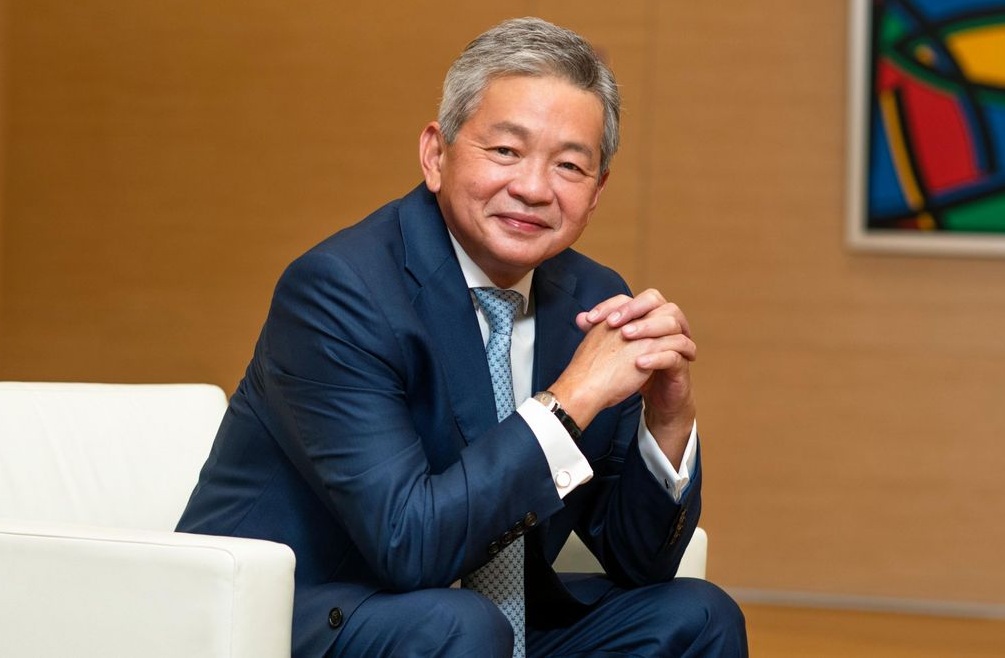
Image: Julius Baer
Singapore Is Becoming Asia’s Switzerland
One of the clearest signs of the shifting balance of power in global wealth management comes from a Swiss bank.
Julius Baer’s remarkable expansion in Singapore illustrates how profoundly the geography of wealth is changing. And I believe Switzerland should pay close attention.
Twenty years ago, Julius Baer employed just 34 people in Singapore. Today, that number exceeds 1,350, making the city-state the bank’s second-largest global hub after Switzerland. More than a quarter of Julius Baer’s worldwide business now originates from Asia, according to Jimmy Lee, the bank’s Asia-Pacific head, in an interview with Singapore’s «The Straits Times»
Numbers Tell a Bigger Story
According to Boston Consulting Group (BCG), cross-border wealth booked in Singapore is projected to increase from $2.1 trillion in 2025 to $3.3 trillion by 2030, representing annual growth of approximately 9 percent.
But what fascinates me more is the transformation of Asian wealth itself. First-generation entrepreneurs traditionally focused on preserving fortunes. Their successors increasingly demand global diversification, alternative investments, sophisticated succession planning and family governance. Singapore has positioned itself precisely where these needs converge.
Two Financial Centres, Two Different Trajectories
Switzerland retains formidable advantages: political stability, legal certainty, centuries of banking expertise and sophisticated wealth-planning capabilities. Singapore offers many comparable strengths, combined with proximity to Asia’s rapidly expanding entrepreneurial wealth.
I would argue that the real distinction lies in momentum. Singapore has deliberately developed an ecosystem connecting private banking, family offices, technology and international business. Switzerland, meanwhile, is increasingly preoccupied with regulation, capital requirements and the consequences of Credit Suisse’s collapse.
Competition or Complementarity?
Julius Baer expects global wealth management to develop around two interconnected networks: a Western axis centred on Switzerland and an Asian axis anchored by Singapore and Hong Kong. I see considerable opportunities for cooperation. But cooperation should never become an excuse for complacency.
Switzerland may remain a global wealth management powerhouse. The uncomfortable question is whether the next generation of international wealth will increasingly look east first.