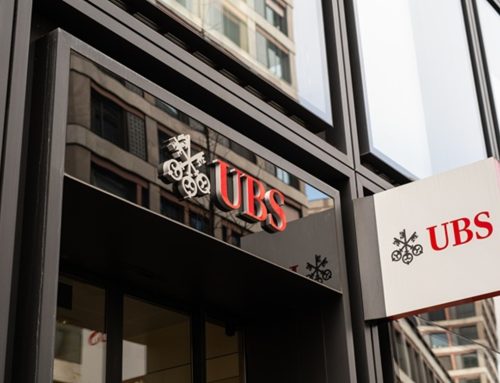


Source: Adobe Stock
HSBC’s AI Gamble in Singapore Sends a Warning to Hong Kong
The rivalry between Singapore and Hong Kong is entering a new and potentially decisive phase.
What began as a battle for wealthy clients, private bankers and assets under management is increasingly becoming a contest for technological supremacy. HSBC’s latest decision reveals just how much is at stake.
I was particularly intrigued by a recent report in the «Financial Times» revealing that the Hong Kong Monetary Authority (HKMA) has questioned HSBC’s decision to establish its new global artificial intelligence centre of excellence in Singapore rather than Hong Kong. The decision has reportedly raised eyebrows in the Chinese financial hub, which remains HSBC’s most important individual market.
Much More Than a Corporate Decision
At first glance, this may seem like a relatively minor operational matter. But I believe it tells us something far more important about the shifting balance of power between Asia’s two leading international financial centres.
The competition is no longer simply about where wealthy families choose to bank. Increasingly, it concerns where banks develop the technologies that will define the industry’s future.
Singapore Scores a Strategic Victory
HSBC announced in July that its Singapore AI centre would employ more than 100 specialists developing applications for the bank’s global operations, initially focusing on wealth management, digital payments and advanced treasury solutions.
At the same time, the bank unveiled plans to recruit another 100 wealth relationship managers in Singapore.
Why Hong Kong Is Concerned
The decision is particularly noteworthy because HSBC has been investing heavily in Hong Kong, reinforcing its historical ties to the territory and its importance for the group’s international wealth management business.
Yet when it came to establishing a global centre for one of the most transformative technologies in banking, HSBC chose Singapore.
Beyond Wealth and Financial Stability
I find this development significant. It suggests that Singapore’s appeal increasingly extends beyond its traditional advantages of political stability, regulatory predictability, international connectivity and an attractive environment for wealthy families.
The city-state is positioning itself as a global centre for financial innovation, combining technological expertise with an increasingly sophisticated wealth management ecosystem.
From Battle for Talent to a Battle for Technology
For years, I have followed the intense competition between Singapore and Hong Kong for international wealth, family offices and private banking talent. Both centres have invested heavily in strengthening their positions. But artificial intelligence adds an entirely new dimension.
The ability to attract AI specialists, develop sophisticated applications and integrate them into financial services could increasingly determine which banks – and ultimately which financial centres – gain a competitive advantage.
Hong Kong Is Fighting Back
Hong Kong, meanwhile, appears unwilling to concede ground. According to the «FT», the HKMA has also been encouraging major international banks to locate more senior executives in the city.
Clearly, the competition for global influence extends beyond technology to the concentration of strategic decision-making and leadership.

Source: Adobe Stock
Swiss Private Banking at a Crossroads: Who Has the Winning Strategy?
Three Swiss private banks, three very different strategies – and one fundamental question: What does it take to succeed in an increasingly competitive wealth management industry?
I have followed the transformation of Swiss private banking for many years. What strikes me today is not merely the pace of change, but the increasingly different paths banks are taking to secure their future.
Some are rebuilding trust and strengthening governance, others are capitalising on their heritage and international networks, while ambitious challengers are seeking to gain market share. Three developments this week caught my attention.
Rebuilding Confidence
At Julius Baer, the transformation continues. Chairman Noel Quinn has proposed two experienced executives, Caroline Kuhnert, formerly of UBS, and Elaine Arden, formerly of HSBC, for election to the board of directors in 2027.
Their proposed appointments follow the bank’s announcement of a share buyback programme worth up to 600 million francs, shortly after FINMA concluded its enforcement proceedings.
Real Challenge Beyond Governance
I regard these developments as part of a broader effort to restore confidence in one of Switzerland’s best-known private banks. Kuhnert brings extensive international wealth management experience, while Arden’s background in human resources and organisational transformation could prove particularly valuable.
However, I believe Julius Baer’s greatest challenge lies beyond the boardroom: combining disciplined risk management with the entrepreneurial spirit that once made the bank such a formidable competitor.
Turning Heritage Into Competitive Strength
A different approach is emerging at Rothschild & Co. In a recent interview with «Citywire Switzerland», CEO Laurent Gagnebin reflected on the evolution of the group’s Swiss private banking business over the past decade, emphasising domestic growth and the advantages of its international network.
What interests me is how an institution with such a distinguished history can transform its heritage into a contemporary competitive advantage.
Why Bigger Is Not Always Better
At a time when many private banks pursue growth through acquisitions and aggressive recruitment, Rothschild & Co illustrates the potential of a different strategy: leveraging an established international franchise, longstanding client relationships and specialist expertise.
I have always believed that size alone is an overrated measure of success in private banking. Ultimately, what matters is whether clients see a compelling reason to entrust their wealth to a particular institution.
Challenger With Ambitions
Then there is Banque Richelieu Switzerland, which has appointed Richard Albrecht as its new CEO. With nearly three decades of banking experience, including senior roles at Deutsche Bank, BNP Paribas and Reyl Intesa Sanpaolo, Albrecht has been tasked with accelerating growth in Zurich and establishing a presence in Geneva.
The French-owned group, which managed more than 11 billion euros at the end of June, aims to reach 15 billion euros within three years through organic expansion and selective acquisitions.
Ambition Is One Thing, Execution Another
I find Banque Richelieu’s ambitions particularly interesting. Despite ongoing consolidation, smaller players evidently still see attractive growth opportunities in Switzerland. But the challenge is substantial.
Recruiting experienced bankers is one thing; attracting clients, generating sustainable revenues and establishing a distinctive market position is quite another. Banque Richelieu must demonstrate that agility, entrepreneurial ambition and personalised service can compete with the advantages of larger institutions.
Three Strategies, One Fundamental Challenge
When I compare these three banks, I see three distinct priorities: Julius Baer is rebuilding credibility, Rothschild & Co is capitalising on its heritage and international reach, and Banque Richelieu is pursuing expansion.
All three approaches have merit, but none guarantees success. What concerns me about the broader industry is that too many banks still pursue almost identical objectives: recruit more relationship managers, gather more assets, enter new markets and improve efficiency.
Differentiation Will Decide the Winners
These objectives are legitimate, but they do not necessarily constitute a distinctive business model. Meanwhile, wealthy clients’ expectations are changing rapidly. Younger generations are reconsidering traditional banking relationships, artificial intelligence is transforming advisory services, and international competition is intensifying.
My conviction is that the next winners in Swiss private banking will not necessarily be the largest institutions, but those with the clearest understanding of whom they want to serve, what makes them different and why clients should choose them.

Source: Adobe Stock
EFG Director – What Does He Know That the Market Doesn’t?
While senior executives at some Swiss banks have been selling shares, a board member of EFG International has taken the opposite approach, investing more than 2 million francs in the bank’s stock. The timing is intriguing – and the transaction deserves a closer look.
I have always found insider transactions fascinating. Not because they reliably predict future share-price movements, but because they occasionally reveal something that polished investor presentations and carefully scripted management statements cannot: a willingness to back a company’s prospects with personal money.
Multimillion-Franc Vote of Confidence?
This week, an unusual transaction at EFG International caught my attention. According to «Cash Insider», a member of the Swiss private bank’s board of directors purchased shares worth slightly more than 2 million francs following a period of weakness in the stock.
The publication reported on 5 October that the timing surprised market participants, particularly against the backdrop of substantial share sales by executives and directors at UBS and Vontobel.
Buying and Selling Are Not the Same
Naturally, there are many legitimate reasons why executives sell shares, including tax obligations, personal financial planning and portfolio diversification. Purchases, particularly sizeable discretionary investments, can carry a different message.
They suggest that an insider considers the investment attractive at the prevailing valuation. But whether that judgement ultimately proves correct is another matter entirely.
Growth Story Remains Intact
The transaction becomes more interesting when viewed against EFG’s recent operating performance. Under CEO Giorgio Pradelli, the Zurich-based private banking group has developed considerable momentum.
In the first half of 2026, EFG attracted 5.7 billion francs in net new assets, equivalent to an annualised growth rate of 6.2 percent, exceeding its target range of 4 percent to 6 percent.
Asia Is Delivering Growth
Asia also plays an important role in EFG’s expansion. The region contributed 2.2 billion francs in net new assets during the first six months of 2026, almost matching the 2.3 billion francs generated in Continental Europe and the Middle East.
This reinforces my conviction that Asian wealth creation remains an essential growth driver for internationally active Swiss private banks.
But the Numbers Also Reveal Challenges
Despite these encouraging developments, I would hesitate to interpret the director’s share purchase as an unequivocal endorsement of EFG’s future share-price performance.
The bank’s revenue margin declined to 91 basis points in the first half of 2026, compared with 97 basis points a year earlier, partly reflecting the lower interest-rate environment. Its cost/income ratio of 71.5 percent also leaves room for operational improvements.
What Is the Market Missing?
What I find most compelling is the contrast between the recent weakness in EFG’s share price and its continuing business expansion. The bank is attracting client assets, recruiting relationship managers and strengthening its international franchise. Whether investors are underestimating this momentum remains an open question.
A 2 million francs share purchase guarantees none of these outcomes. But when a bank director commits such a substantial amount of personal capital, I believe it deserves attention. Sometimes the most interesting signals in banking come not from what executives say, but from what they do.

Source: Adobe Stock
Hedge Funds Promise Protection – But Do They Deliver When Markets Crash?
Hedge funds have long been marketed as an essential component of sophisticated investment portfolios. But do they really protect investors when financial markets collapse? A revealing analysis by Swiss independent wealth manager Amadeus Capital challenges one of the investment industry’s most persistent assumptions.
I have always been intrigued by the promises surrounding alternative investments, particularly hedge funds. They are frequently presented as sophisticated strategies capable of generating attractive returns while protecting portfolios against market turbulence.
For wealthy private clients, family offices and institutional investors, that proposition sounds compelling. But I believe we should ask a much simpler question: What happens when markets really fall apart?
Three Decades of Evidence Challenge Conventional Wisdom
An interesting analysis by Geneva-based Amadeus Capital, highlighted this week in «Citywire Switzerland», examines almost three decades of hedge fund performance.
Its central conclusion is uncomfortable for an industry that has built much of its appeal around diversification and downside protection: most hedge fund categories appear to provide considerably less protection during financial crises than their reputation might suggest. Only one category emerges as a notable exception.
Illusion of Diversification
I find these findings particularly relevant because diversification has become something of a magic word in wealth management. Private bankers routinely recommend combining traditional equities and bonds with alternative investments, arguing that the resulting portfolios should prove more resilient during market downturns.
In principle, this makes sense. But the crucial question is whether those investments actually behave differently when financial markets experience severe stress.
When Everything Suddenly Moves Together
Many hedge fund strategies retain substantial exposure to the same economic forces that influence traditional investments. Equity long-short funds may reduce their sensitivity to stock markets, but they do not necessarily eliminate market risk.
Credit-oriented and leveraged strategies can encounter similar problems when liquidity evaporates, financing costs increase and investors suddenly become unwilling to assume risk.
The uncomfortable reality is that investments which appear diversified during normal market conditions can become dangerously correlated precisely when diversification is needed most.
Hedge Funds Are Not One Asset Class
What strikes me is how frequently hedge funds are discussed as though they constituted a homogeneous investment category. They do not.
The differences between equity long-short, global macro, managed futures and convertible bond arbitrage strategies can be enormous. Some approaches depend heavily on favourable financial-market conditions, while others seek to exploit pricing inefficiencies, volatility or sustained market trends.
Markets Reverse Suddenly
Trend-following strategies, for example, can potentially benefit from prolonged market declines if they establish appropriate positions. Yet even these approaches may struggle when markets reverse suddenly or experience erratic fluctuations.
The important distinction is that protection depends on a strategy’s underlying exposures, not simply on its classification as a hedge fund.
Complexity Is Not the Same as Protection
Another aspect concerns me: the tendency to associate investment complexity with superior risk management. The wealth management industry has become extraordinarily proficient at developing sophisticated financial products.
But sophistication alone does not guarantee protection, especially when leverage, illiquidity or less transparent risk exposures are involved.
The Real Test Comes During a Crisis
For me, the most important lesson is that investment strategies should be evaluated not merely by their average returns or historical volatility, but by how they behave when investors need protection most.
Do they preserve capital during severe market declines? Can they provide liquidity when other assets become difficult to sell? Do they offer genuinely independent sources of return, or simply repackaged exposure to familiar risks?
Protection Must Be Proven, Not Promised
I am certainly not suggesting that hedge funds have no place in diversified portfolios. Carefully selected strategies can provide valuable opportunities that conventional investments cannot easily replicate. But their contribution needs to be demonstrated rather than assumed.
Wealth managers should stop asking whether their clients have enough hedge funds and start asking whether those funds actually provide the protection they are supposed to deliver. Because in wealth management, the true value of diversification is not established when markets are rising. It becomes apparent when everything else is falling.

Source: WealthSummit
Private Banks Can Inherit Wealth – But Can They Inherit Client Loyalty?
Wealth can be inherited. Client loyalty cannot. This uncomfortable reality is becoming one of the most pressing strategic challenges facing private banks worldwide.
An article by Christoph Künzle, founder and CEO of WealthSummit, published recently on the ZHAW Wealth Management Blog, highlights why the next generation of wealthy clients may prove far less loyal than the industry would like to believe.
For decades, private banking has thrived on longstanding relationships. I have often heard bankers proudly explain that their institutions have advised the same wealthy families for two or even three generations.
Such relationships are undoubtedly valuable. But I increasingly wonder whether banks are confusing historical success with a guarantee of future business.
A Revealing Look at the Next Generation
In his article on the ZHAW Wealth Management Blog, Christoph Künzle examines one of the most consequential findings of the latest NextGen Private Banking Study, conducted in Singapore and Southeast Asia and co-authored by him.
Based on 1,049 survey responses and nine qualitative interviews, the research reveals that 71 percent of respondents maintain their primary banking relationship with a different institution from their parents.
Family Relationships No Longer Guarantee Loyalty
This does not necessarily mean that these clients abandoned their parents’ bank after inheriting wealth. Some may never have become clients of that institution in the first place.
But the message is equally important: longstanding relationships with wealthy families do not automatically translate into loyalty across generations. I consider this one of the most significant findings of our research.
The Relationship Manager’s Dilemma
Imagine a private banker who has advised a successful entrepreneur for thirty years. The relationship is close, perhaps even personal. The banker knows the family, has attended important celebrations and occasionally invites the children to exclusive events.
But does this mean that those children will eventually entrust their own wealth to the same institution? I would not bet on it.
NextGen Does Not Necessarily Mean Young
Another finding challenges a widespread misconception. The private banking industry frequently associates the next generation with millennials, digital natives and Gen Z. Yet our research suggests that this definition is far too simplistic.
The next generation also includes established entrepreneurs, successful professionals and experienced wealth holders who are assuming greater responsibility for family assets.
A Question of Mindset, Not Age
What defines these clients is not primarily their age, but their financial responsibilities, expectations and independence. I believe banks that continue to treat NextGen wealth as little more than a youth-marketing exercise are missing the bigger picture.
The real challenge is understanding how a new generation of decision-makers thinks about wealth, financial advice and banking relationships.
The Future Belongs to Hybrid Advice
The next generation is not rejecting human relationships. Rather, it is becoming more selective about where personal expertise adds genuine value. Routine tasks can increasingly be automated. But when it comes to succession planning, complex investment decisions, tax considerations and long-term financial security, trusted advisers remain essential.
The future of private banking will depend on how intelligently banks combine digital efficiency with meaningful human relationships.
A Structural Problem for Private Bank CEOs
There is another dimension that I believe deserves much greater attention: incentives. Private bankers are traditionally rewarded for attracting assets, generating revenues and maintaining profitable relationships.
Developing a relationship with the children of an existing client, however, may produce little immediate financial benefit. Why should a relationship manager devote substantial time to a prospective client whose wealth transfer may still be ten or fifteen years away?
Succession Must Become a Strategic Priority
This is where I see a fundamental management challenge. If banks genuinely want to secure their future client base, they must rethink how they identify, engage and reward relationships with the next generation.
Succession planning cannot remain a peripheral service offered by wealth planners. It needs to become a central strategic priority, with clear responsibilities, dedicated resources and measurable objectives.
The Most Important Lesson for Private Banks
For me, the conclusion is already clear. Private banks may inherit the responsibility for managing family wealth, but they cannot inherit the loyalty of the people who will ultimately control it.
That loyalty must be earned again, generation after generation.