
After building a career across industries, including film, mobile gaming, and HealthTech in cities around the world, Priyanka Sharma Wahl has called Zurich home for more than a decade. It is here that she recently co-founded a platform dedicated to enabling cross-cultural exchange in contemporary Indian arts. It creates a space for dialogue among artists, curators, and cultural practitioners, broadening global perspectives through diverse forms of contemporary expression.
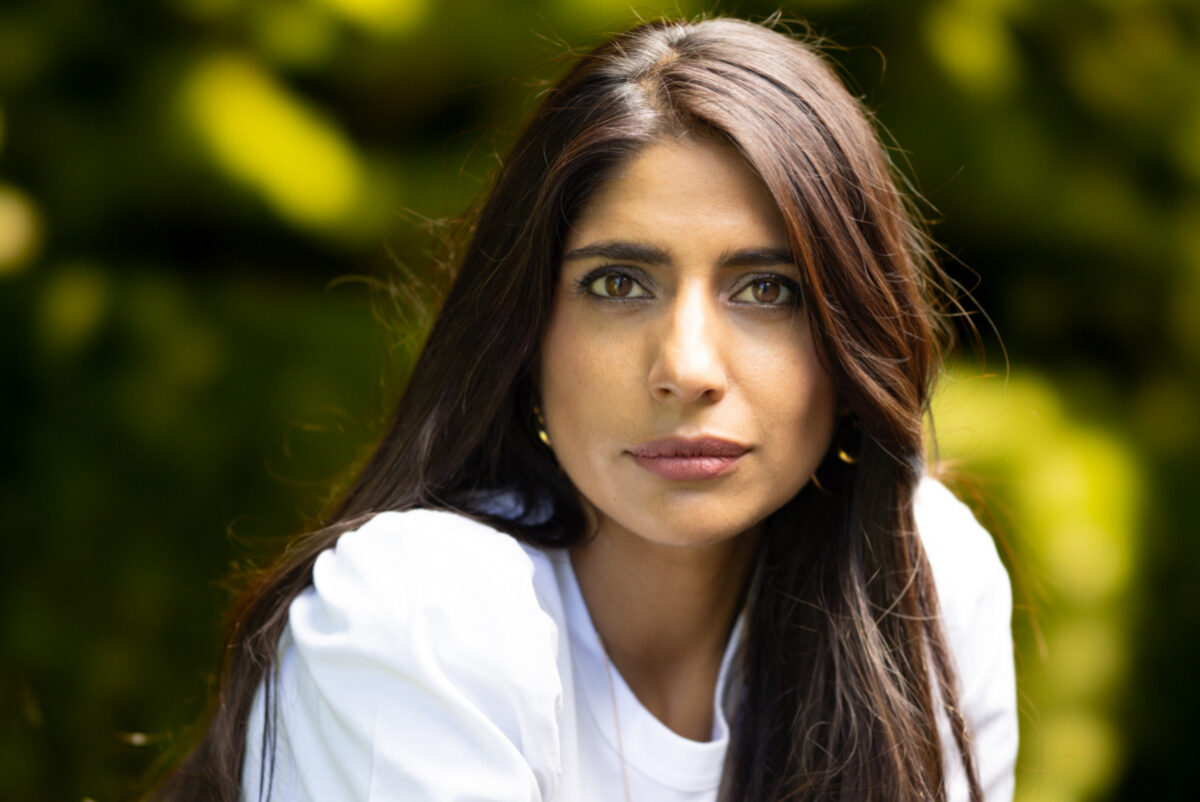
Ambassador of contemporary Indian Art (Image by Amanda Nikolic)
Priyanka Sharma, you have been living in Switzerland for more than a decade. In late 2025, you co-founded the Swiss Indian Arts Collaborative (SIAC). What motivated you to do this?
The catalyst was a very personal, full-circle moment here in Zurich. Through my friend and now co-founder, Neeta Premchand, I was introduced to the Museum Rietberg. Last year, the «Ragamala» exhibition, curated by our other co-founder Sonika Soni, sparked what would eventually become the Swiss Indian Arts Collaborative (SIAC).
«Ragamala» revealed the possibility of presenting India not only through heritage and tradition, but as a dynamic, contemporary cultural force. That experience brought the four of us, Neeta Premchand, Sonika Soni, Alpana Burgauer, and me, together. We co-founded SIAC as a platform to build bridges between contemporary Indian cultural practitioners and Swiss audiences and institutions.
What makes you believe SIAC will develop successfully?
As ties between India and Switzerland continue to deepen, including through the recent Trade and Economic Partnership Agreement between India and EFTA member states, Switzerland, Norway, Iceland, and Liechtenstein, we believe cultural exchange will strengthen the mutual understanding between the regions.
Zurich is particularly important because it already has a serious foundation in Indian arts, especially through Museum Rietberg and the expertise of people like Dr. Annette Bhagwati and Dr. Johannes Beltz.
Why is contemporary Indian art still so underrepresented in Europe, and therefore also in Switzerland?
South Asian contemporary art and its audiences are present across Europe, though often concentrated in niche circles. While Indian and South Asian artists have not yet achieved the same level of mainstream visibility as they do in their home countries and the US, a palpable shift is underway.
With increased cultural outreach by the Indian government and stronger representation by Indian galleries at major international art events, like the return of the National Pavilion of India at the 2026 Venice Biennale, the landscape is evolving.
What do you think needs to happen for contemporary Indian art to gain broader international recognition?
To change the international perception of contemporary Indian art, we need a fundamental shift toward visibility, sensitivity, and contextual understanding.
Contemporary Indian art, while rooted in very specific contexts, speaks to profoundly universal experiences. The current generation of artists is doing more than just representing South Asia’s rich cultural heritage.
They are confronting the complexities of contemporary India, questions of identity, migration, memory, inequality, a shared pain of displacement, and the enduring impact of structures such as caste. At the same time, many are drawing deeply from histories and traditions that go back centuries.
The themes these artists explore resonate far beyond India because they reflect questions many societies are grappling with today. What is needed internationally is a more thoughtful and nuanced appreciation of these artists and their work – one that situates contemporary Indian art within a broader global discourse.
At the Zurich Art Weekend, you will present SIAC’s first program. How did you make your selection, and what can audiences expect?
We built SIAC’s first program for the Zurich Art Weekend as an «insider’s lens» on contemporary Indian art. We looked for experts who not only know the Indian scene intimately but are skilled at translating it for international contexts. The selection balances different parts of the ecosystem, galleries, museums, private collections, festivals, and research, so that the discussion reflects how art circulates between India and the wider world.
Audiences can expect a conversation on how local traditions, modern movements, and global influences interact. The panel brings together gallerists, curators, and advisors active in Venice, Kochi, Mumbai, Goa, New Delhi, Zurich, and beyond. It will also address how Indian art travels: who shapes those narratives, what is gained in translation, and what risks being simplified or lost.
We are also screening two films, produced by GBF Foundation and Museum Rietberg, at the Museum Rietberg: «Portrait of a Cloud» and «Musavari,» which offer an intimate look at how traditional miniature painting is evolving in the hands of contemporary artists like Manish Soni and Murad Khan Mumtaz.
Across our events, we hope to build a conversation that connects heritage and contemporary practice and showcases the dynamism of the Indian art scene today – including the rise of younger collectors, new institutional attention, and India’s growing global presence.
Are younger people really interested in understanding the message and voices presented through art?
There is an unmistakable shift in the art world and beyond. I’ve observed that younger collectors and enthusiasts are interested not only in the object, but also in the message and the values behind it. Also, the «experience economy,» where people place value on having unique, meaningful experiences with artists and communities, for example, can complement ownership in and of itself.
Digital platforms have democratized the playing field through algorithmic and peer-driven discovery, so the traditional gatekeepers no longer control the narrative, and an artist’s authentic voice and message are now their most critical asset.
Ultimately, this technological evolution can amplify the artist’s voice, allowing them to deliver personal, value-driven messages for the next generation of consumers and collectors.
What do you hope to achieve with SIAC?
We hope to establish a platform that honours the depth of India’s artistic heritage while showing it as a vibrant, evolving presence within contemporary global culture.
Rather than presenting tradition, modernity, and contemporary as separate, we want to show how they feed into each other, how artists and cultural practitioners today are reimagining historical practices, materials, and ideas in entirely new ways.
From our base in Zurich, we’re aiming to create a space for meaningful encounters, offering Swiss and global audiences a more nuanced understanding of Indian contemporary arts, whether visual art, film, or music, as both rooted in centuries of practice yet actively engaged with the present moment.
This is a significant moment in the trajectory of contemporary Indian art – one in which its many voices and movements are not only being showcased, but are also critically engaged with and appreciated within broader discourses.
If you could convey just one thing about contemporary cultural India to a Swiss audience, what would it be?
Contemporary India doesn’t fit into just one story, but a constantly shifting conversation. It’s a place where centuries-old traditions and new ideas coexist in the same artwork, film, song, or city street – not as opposites, but as collaborators.
If a Swiss audience holds on to one idea, it might be: India is less a fixed identity and an intensely self-reflective culture that is always in motion. And perhaps, it has far more in common with Switzerland’s own spirit of innovation and heritage than many may expect.
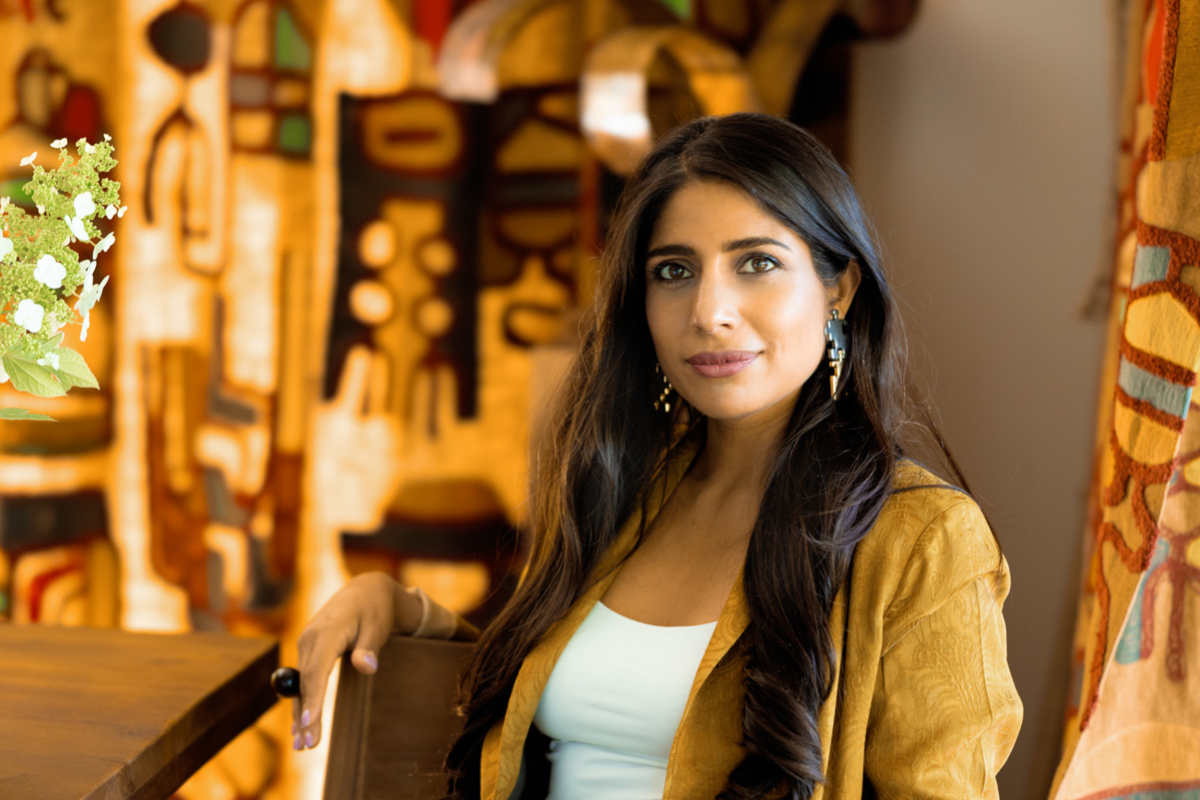
True global citizen (Image by Amanda Nikolic)
Born in New Delhi, India, Priyanka Sharma Wahl is a true global citizen. Having grown up in Saudi Arabia, she has lived and worked across India, Silicon Valley, Singapore, and Europe, shaping a perspective that bridges cultures, business, and arts.
Following her studies at New York University and Stanford University, Priyanka built a diverse career, spanning mobile gaming, HealthTech, and film. In 2014, she completed her MBA at INSEAD, studying between France and Singapore, before settling in Zurich, which has been her home for more than a decade.
More recently, Priyanka has drawn inspiration from the work of her father, Deepak Sharma, and his wife, Susan Lim, whose practice explores the intersection of science, technology, and music. Witnessing the evolution of the Lim Trilogy, a musical journey examining the relationship between humans and artificial intelligence, further strengthened her belief in art’s unique ability to humanize complex and often intimidating ideas.