

Private Markets Giants Hunt for Swiss Billions
An increasing number of international private markets specialists are establishing or expanding their presence in Switzerland. I see this as more than a vote of confidence in the Swiss financial centre.
It signals a profound shift in the economics of wealth management. Two announcements this week caught my attention. US private markets specialist Hamilton Lane appointed Michael Vonmoos, a former senior executive at Credit Suisse and Deutsche Bank, as Head of Switzerland. Just one day later, Neuberger announced the appointment of Michael Sommer to strengthen its Swiss team.
Both appointments primarily target institutional investors. However, I believe they form part of a much broader development that will increasingly reshape Swiss private banking.
Unprecedented Concentration of Global Players
In September, Blue Owl Capital opened an office in Zurich, specifically targeting private banks, independent wealth managers and financial intermediaries.
Apollo Global Management established a Zurich office in 2025 with ambitions to build a team of 50 professionals within three to five years. KKR has been expanding its Swiss presence since late 2023, while Oaktree and HarbourVest have also established local operations.
In June 2026, Partners Capital opened a Zurich office, revealing that existing Swiss client relationships already accounted for nearly 10 percent of its global assets.
These are no longer isolated developments. Switzerland is becoming a strategic battleground for some of the world’s most powerful investment firms.
Battle for the Value Chain
What fascinates me is the changing relationship between private banks and international asset managers. Historically, Swiss private banks controlled both the client relationship and much of the investment value chain.
Today, global alternatives specialists increasingly provide the investment expertise, product innovation and underlying assets that wealthy clients demand.
The emergence of evergreen funds, lower investment thresholds and more sophisticated distribution platforms is accelerating this transformation. In September, KKR even overtook Switzerland’s Partners Group as Europe’s largest manager of locally domiciled evergreen private markets funds.
Wake-up Call for Swiss Private Banks
I see considerable opportunities here, particularly for smaller private banks and independent wealth managers that cannot build competitive private markets capabilities themselves.
But there are also risks. Who captures the margins? Who controls the investment proposition? And who ultimately owns the client relationship?
Recent liquidity pressures in parts of the private markets industry also remind us that broader accessibility does not eliminate underlying investment risks.
In my view, Swiss private banks must become exceptionally skilled at selecting, combining and independently assessing external investment solutions rather than simply distributing them.
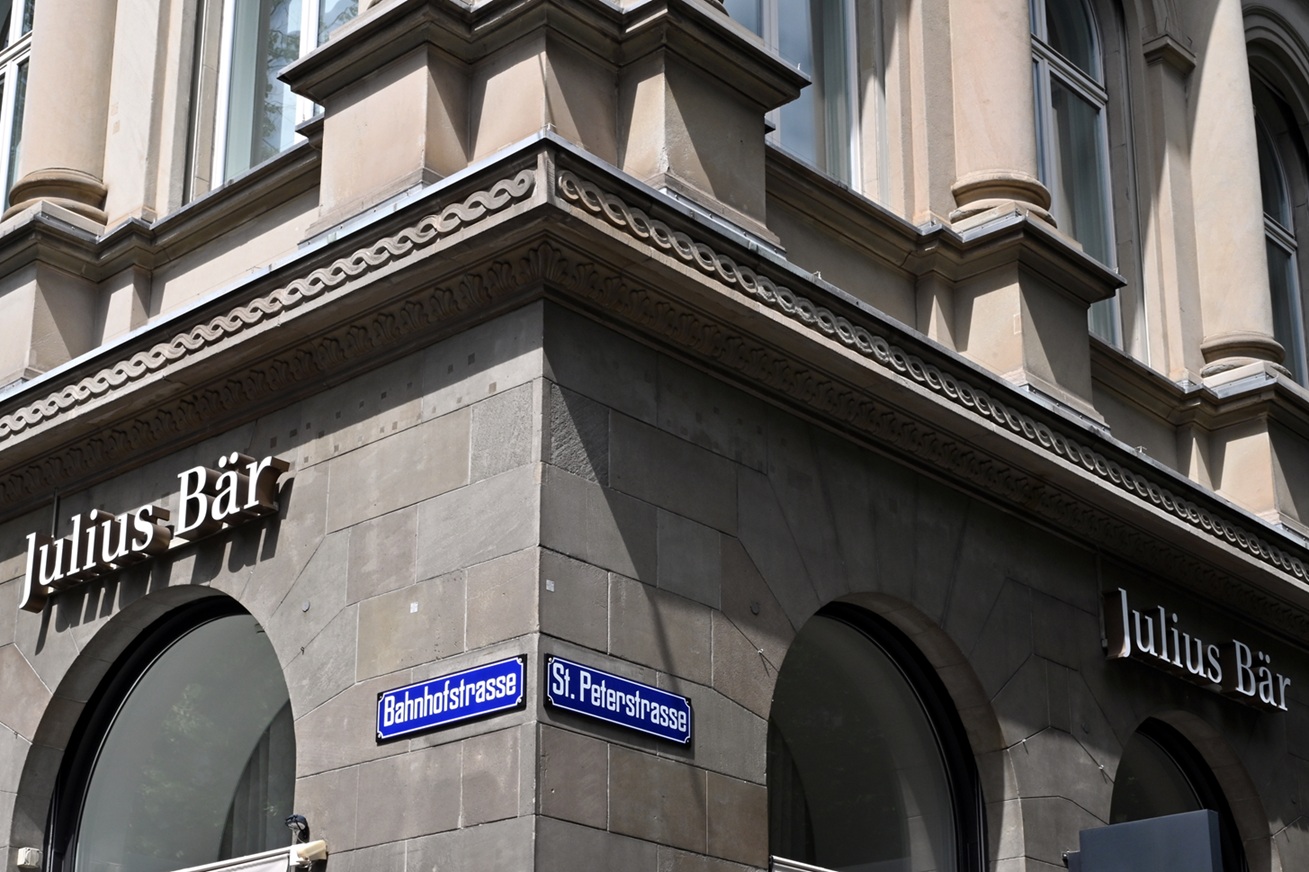
Julius Baer in Zurich (Image: Adobe Stock)
Julius Baer and the Price of Broken Trust
A renewed 20 million francs legal battle confronting Julius Baer raises questions that extend far beyond the Zurich-based private bank. In an industry built on personal relationships, where does institutional responsibility end and individual accountability begin?
I have long regarded the relationship between private banks and independent wealth managers as one of the most fascinating – and potentially delicate – aspects of Swiss private banking. A case reported by the «Financial Times» this week illustrates why.
Switzerland’s Federal Supreme Court has upheld the conviction of Benjamin Guzman, a former managing director at Julius Baer, who misappropriated millions from two wealthy clients, partly to finance his personal lifestyle, including the purchase of a yacht.
After leaving the bank to become an independent wealth manager, Guzman continued managing the couple’s fortune. His subsequent investment activities involved a 8.25 million francs Lombard loan granted by Julius Baer. The criminal ruling brings a separate 20 million francs civil claim against the bank back into focus.
Ambiguity of Independence
What interests me most about this case is the triangular relationship between the client, the independent wealth manager and the custodian bank. For decades, this business model has been one of Switzerland’s great competitive advantages. It offers entrepreneurial freedom to advisers, greater choice to clients and an attractive distribution channel to banks.
But it also creates ambiguities. When a successful relationship manager leaves a private bank to establish an independent business, clients frequently follow. The personal relationship survives, while the institutional framework changes fundamentally. Do clients always fully appreciate the implications?
Trust Is Not a Control Mechanism
Over the years, I have observed how private banks compete aggressively for independent wealth managers. Attractive financing conditions, sophisticated investment platforms and commercial incentives are all part of the equation.
Yet the enthusiasm for attracting assets must never compromise the independence of risk management. Banks need to distinguish clearly between respecting an external manager’s investment autonomy and overlooking unusual transactions.
Conversely, independent wealth managers must recognise that entrepreneurial freedom comes with considerable fiduciary and organisational responsibilities. Regulatory licensing alone cannot guarantee integrity.
A Question for the Entire Industry
The outcome of the civil proceedings remains open, and it would be premature to conclude Julius Baer’s legal liability. However, I believe the case should prompt a broader discussion across Swiss private banking, particularly as more bankers consider becoming independent and institutions intensify their competition for external asset managers.
Ultimately, the strength of this business model depends on clearly defined responsibilities, transparent incentives and effective safeguards. Personal trust remains the most valuable currency in wealth management. But it must never become a substitute for institutional vigilance.
The moment it does, the price of broken trust can far exceed any financial settlement.

UBS (Image: Adobe Stock)
UBS: Losing the Battle, Changing the Strategy
After more than two years of fighting Switzerland’s proposed capital requirements, UBS appears increasingly resigned to accepting the new regulatory reality. I wonder whether this political defeat might ultimately accelerate a strategic transformation that has been underway for more than a decade.
According to a «Reuters» report this week, Switzerland’s largest bank is preparing to adjust its business strategy to significantly tougher capital requirements. While management continues to seek concessions, the scope for compromise appears increasingly limited.
Much of the public debate has focused on whether UBS might relocate its headquarters abroad. Personally, I find another question considerably more intriguing: what kind of bank will UBS become under the new regulatory regime?
Back to Its Core Competencies
Having followed Swiss banking for several decades, I cannot help noticing a certain historical irony. The ambitions of Switzerland’s largest banks to become global investment banking powerhouses have repeatedly exposed them to existential risks.
UBS had to be rescued in 2008, 15 years later, Credit Suisse disappeared as an independent institution. Both episodes demonstrated the enormous risks that globally active financial conglomerates can pose to a relatively small country.
Could the new capital requirements ultimately achieve what successive management teams struggled to accomplish: an even more decisive concentration on wealth management?
Economics of Capital Allocation
Higher capital requirements change the relative attractiveness of individual business divisions. Investment banking, particularly capital-intensive trading activities, could become less rewarding compared with businesses generating recurring, fee-based revenues.
I do not expect UBS to abandon investment banking. Its capabilities in capital markets, corporate finance and structured investments are important differentiators when serving ultra-high-net-worth individuals, entrepreneurs and family offices.
However, I anticipate a more selective investment bank, whose strategic rationale increasingly derives from its contribution to the broader wealth management franchise rather than from its ambitions as a standalone global powerhouse.
Real Growth Opportunity
From my perspective, the most compelling opportunities for UBS lie elsewhere: in the intergenerational transfer of wealth, the expansion of Asian private banking, the growing sophistication of family offices and the increasing allocation of private wealth to alternative investments.
These are precisely the areas where UBS can leverage its international reach, technological infrastructure and established client relationships.
The question of Switzerland’s competitiveness remains legitimate. Excessive regulation could weaken its largest financial institution and benefit international rivals. Equally, however, a well-capitalised global wealth manager operating from a politically stable jurisdiction with a strong currency could represent an increasingly attractive proposition.
I would therefore not necessarily interpret UBS’s looming regulatory defeat as the beginning of its decline. It might instead mark the next chapter in its evolution towards becoming the world’s pre-eminent wealth management institution. Or, let’s put it this way : Sometimes, losing a political battle forces an institution to rediscover its greatest competitive advantage.
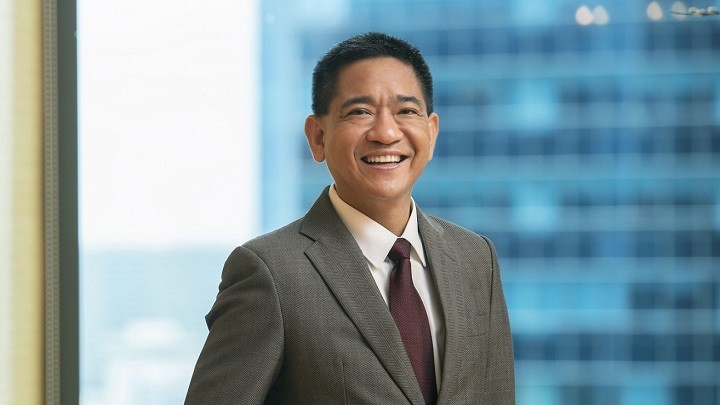
Jason Moo (Image: media)
The Best Private Bankers May Not Be the Best Salespeople
At a time when private banks are competing fiercely for relationship managers, I find it refreshing to hear a bank CEO challenge one of the industry’s most deeply entrenched assumptions.
In a recent interview with Singapore’s «The Straits Times», Jason Moo, CEO of Bank of Singapore, offers some compelling reflections on what makes a successful private banker. His observations deserve particular attention from Swiss banking executives.
Moo, whose career includes senior positions at Goldman Sachs and Julius Baer, argues that personality is secondary to the ability to establish trust. His institution’s recruitment ambitions – several hundred additional bankers over the coming years – make this more than a philosophical observation.
Beyond the Asset-Gathering Mentality
Having followed the private banking industry for several decades, I have often been struck by the discrepancy between what banks say they expect from their relationship managers and what they actually reward.
While virtually every private bank emphasises client centricity, long-term relationships and individual solutions, the performance of its bankers is still predominantly measured by net new money, revenues and profitability.
These are legitimate commercial metrics. However, I wonder whether an excessive focus on them discourages precisely the qualities that distinguish an outstanding wealth adviser: intellectual curiosity, empathy, patience and independent judgement.
The ability to listen is considerably more difficult to quantify than the ability to sell.
Changing Client Proposition
This becomes particularly relevant in Asia, where many wealthy individuals remain actively involved in their businesses. Their financial requirements extend well beyond conventional portfolio management.
Bank of Singapore’s impressive development illustrates the commercial potential of addressing these more complex needs. In 2025, its assets under management increased by more than 20 percent, with particularly strong momentum among ultra-high-net-worth clients and independent asset managers.
I see enormous potential in the combination of private and corporate banking capabilities, particularly when serving entrepreneurial families whose personal wealth cannot easily be separated from their business interests.
What This Means for NextGen
Moo’s observations also resonate with the research we have conducted at WealthSummit into the expectations of NextGen private banking clients in Singapore and Switzerland.
As artificial intelligence (AI) increasingly takes over administrative, analytical and transactional activities, I believe the relationship manager’s human qualities will become more valuable, not less. Private banks may therefore need to reconsider not only whom they recruit but also how they train, evaluate and compensate their advisers.
Perhaps the industry’s greatest talent challenge is not finding enough bankers who can bring in assets, but identifying people capable of becoming genuinely trusted advisers across generations.
In the age of AI, the most valuable private banker may ultimately be the one who demonstrates the greatest degree of human intelligence.
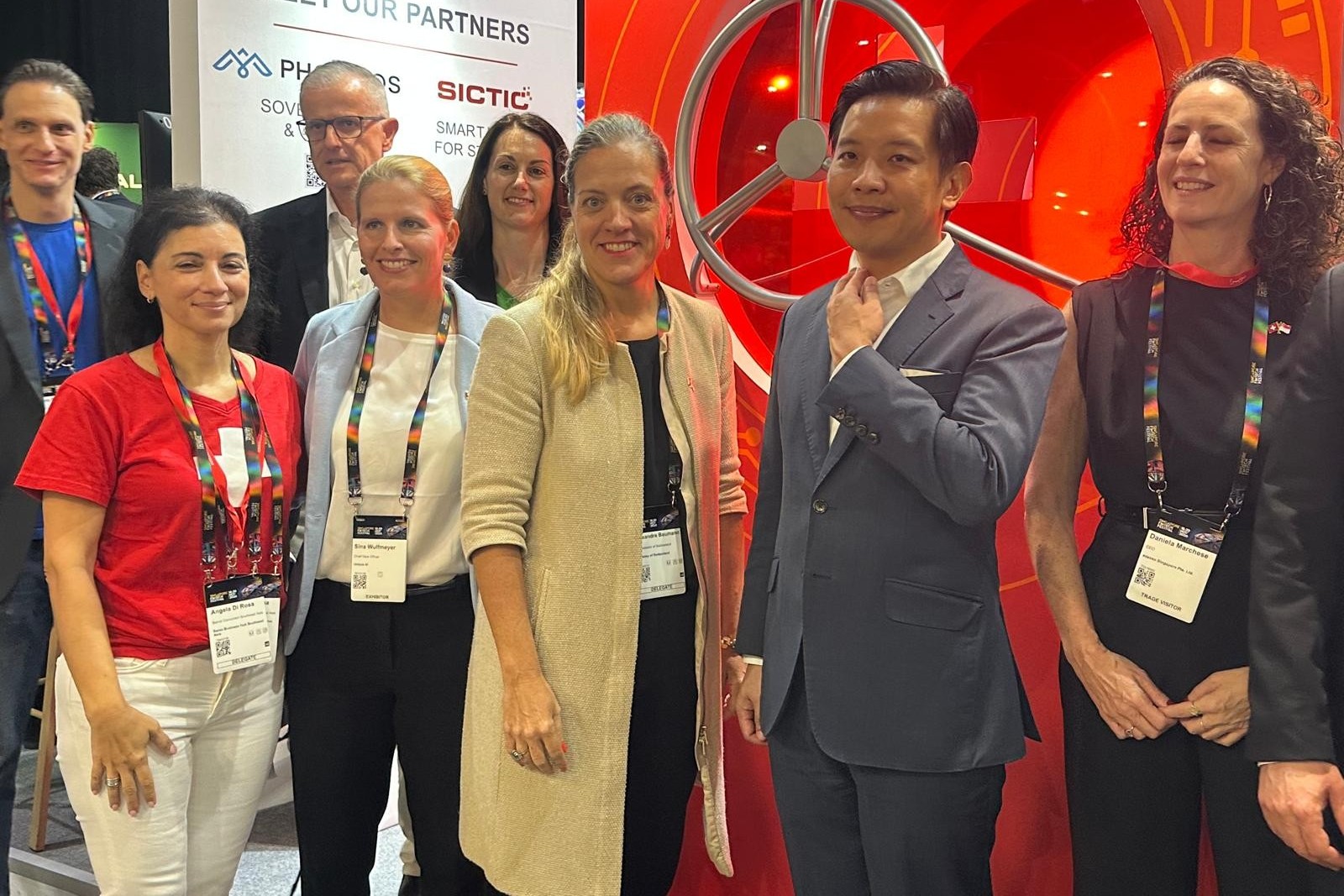
Alvin Tan with Swiss delegation at Singapore Fintech Festival (Image: Claude Baumann)
Switzerland Makes a Strong Statement in Singapore
With a record number of exhibitors at the Singapore FinTech Festival 2026 and a high-profile ministerial visit on its opening day, Switzerland is demonstrating its determination to remain at the forefront of global financial innovation. The timing could hardly be more significant.
On the opening day of the Singapore FinTech Festival (SFF), Alvin Tan, Singapore’s Minister of State for Foreign Affairs, visited the Swiss Pavilion, where he was welcomed by Swiss Ambassador Alexandra Baumann, Deputy Head of Mission Regula Kurzbein, and Angela Di Rosa, Senior Trade Officer at the Swiss Business Hub Southeast Asia.
The visit underscores the importance Singapore attaches to its relationship with Switzerland. In 2027, the two countries will celebrate 60 years of diplomatic relations – a partnership characterised by mutual trust, economic cooperation and a shared commitment to innovation.
Two Financial Centres with Shared Ambitions
Despite their geographical distance, Switzerland and Singapore have much in common. Both have successfully established themselves as internationally recognised financial centres, drawing on political stability, regulatory credibility, entrepreneurial dynamism and an increasingly sophisticated technology ecosystem.
Both are also confronting similar challenges: the rapid emergence of AI, the transformation of financial services through digital assets and tokenisation, changing client expectations and intensifying global competition for talent and capital.
These developments create considerable opportunities for closer collaboration between the two financial centres.
Record Swiss Presence
Switzerland has participated in the Singapore FinTech Festival since its inception in 2016. A decade later, the Swiss Pavilion brings together a record number of exhibitors, reflecting the growing international ambitions of Switzerland’s financial and technology companies.
From artificial intelligence and cybersecurity to digital assets, investment technology and financial infrastructure, Swiss companies are showcasing solutions that address some of the most pressing challenges facing the global financial industry. For Swiss entrepreneurs, Singapore also represents an important gateway to Southeast Asia, one of the world’s most dynamic economic regions.
Reporting from the Forefront of Financial Innovation
The Singapore FinTech Festival, taking place from 18 to 20 November 2026, provides an exceptional opportunity to explore the technological, economic and geopolitical forces reshaping global finance.
For Switzerland, participation is about much more than showcasing technological excellence. It is about building international partnerships and ensuring that the country remains an active participant in shaping the future of financial services.
WealthSummit is proud to be the exclusive media partner of the Swiss Pavilion, reporting directly from Singapore on the developments, personalities and strategic initiatives that will help define the next chapter of global finance.