Money can buy talent. But can it buy an entrepreneurial mindset? As global banks battle for the best professionals, independent wealth managers are betting on freedom, responsibility, and personal ambition. Yet independence is not for everyone, says Jan Dirkmann, CEO of Singapore-based Lumen Capital Investors, in an exclusive interview with WealthSummit.

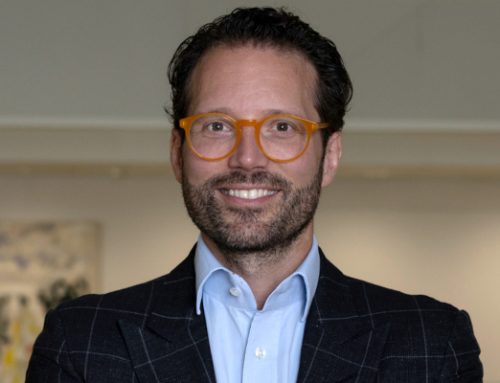
Jan Dirkmann, CEO of Singapore-based Lumen Capital Investors (Image: LCI)
Jan Dirkmann, Singapore’s private banking industry is booming, and global banks have deep pockets when it comes to attracting talent. How can an independent wealth manager compete with these financial heavyweights?
We offer something that larger institutions often struggle to provide: broader responsibilities, direct access to decision-makers, and the opportunity to make a visible impact. There is less thinking in boxes and more room to shape the business. Of course, competitive compensation matters.
But so does knowing that your ideas count and that you can genuinely influence what you are building.
Has money lost some of its pulling power? Are talented professionals increasingly looking for freedom, responsibility, and a sense of purpose instead?
Compensation remains very important. But professionals increasingly value independence, responsibility and flexibility. The only constant is change – now more than ever.
«You need a flexible mindset, openness to change, and the willingness to go the extra mile»
Smaller firms can respond quickly, and our employees have a direct role in shaping that change rather than simply adapting to decisions made elsewhere.
Leaving the comfort of a major private bank for an independent wealth manager can be a culture shock. Who thrives in this environment – and who is likely to struggle?
Those who succeed are open to change, proactive, and prepared to take greater responsibility. They look beyond their job descriptions and actively help solve problems. Entrepreneurial freedom only works when people take ownership rather than wait to be told what to do.
Independence sounds appealing. But what does it really mean on a Monday morning – beyond the recruitment pitch?
It means greater freedom to shape client relationships and identify the most suitable solutions across different providers. But there is another side to the equation.
You need a flexible mindset, openness to change, and the willingness to go the extra mile – including working long hours when clients or the business need you. Independence comes with greater accountability.
As Lumen Capital Investors grows, isn’t there a danger of becoming exactly what independent wealth managers promise not to be: another bureaucratic financial institution?
That is why we set clear entrepreneurial targets, give people the authority to deliver, and hold them accountable for results. As we expand, professional processes and strong controls become essential.
«Succession begins years before retirement»
But they must support initiative rather than suffocate it. We need enough flexibility to remain entrepreneurial and efficient in our decision-making.
Artificial intelligence (AI) is reshaping the financial industry. Are traditional banking qualifications becoming less important than curiosity, adaptability and technological intelligence?
Financial expertise remains essential. But I increasingly look for an entrepreneurial mindset, curiosity, sound judgement, digital confidence and the ability to use AI critically.
Communication and collaboration are equally important. We need people who learn quickly, question the outputs they receive and can explain complex issues clearly. Technology is valuable, but the ability to think critically about what it produces is just as important.
Many independent wealth managers are built around their founders and a handful of senior relationship managers. How do you prevent today’s success from becoming tomorrow’s succession problem?
Succession begins years before retirement. Younger colleagues need meaningful exposure to clients, experienced mentors and progressively greater responsibility.
It is important that clients develop trust in a team rather than depend exclusively on one individual. A credible path towards ownership can also strengthen long-term commitment and help develop the next generation of entrepreneurs.
Lumen Capital Investors is based in Singapore, while its sister company, Lumen Capital (Schweiz), operates in Zurich. Do you see fundamentally different attitudes towards careers, ambition and entrepreneurial risk?
I would be cautious about drawing sharp cultural distinctions between our teams. Singapore’s regional environment places particular emphasis on cross-cultural relationships and business development, while Switzerland benefits from a deeply established wealth management ecosystem.
«That combination is essential if we want to nurture the next generation»
Both markets offer attractive entrepreneurial careers. Ultimately, individual ambition and a willingness to take responsibility matter more than broad cultural generalisations.
Singapore has a reputation for embracing growth and change, while Switzerland is renowned for stability and long-term relationships. What should the two financial centres learn from each other when competing for the next generation of talent?
Singapore employers can draw on Switzerland’s longstanding experience in building enduring advisory relationships and managing succession. Swiss employers, meanwhile, can take inspiration from Singapore’s openness to new markets and experimentation.
In both financial centres, future leaders are developed by giving them real responsibility and access to experienced mentors. That combination is essential if we want to nurture the next generation of successful wealth management entrepreneurs.
A seasoned private banker, Jan Dirkmann started his career with UBS in 1996. He joined Lumen Capital Investors (LCI) in 2013. Prior to joining LCI, he was Executive Director and Head of Independent Asset Managers Asia (Singapore) at Bank Julius Baer.