Nicolas Syz has ambitious plans for the family-owned Swiss banking group. Having taken over as CEO of Bank Syz earlier this year, he is targeting a 50 percent increase in assets under management over the next five years – without sacrificing profitability or the bank’s entrepreneurial DNA.
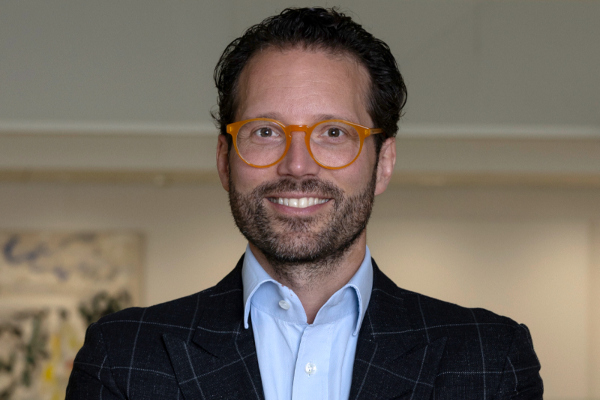
Nicolas Syz, CEO of Bank Syz (Image: Allnews)
In this interview, originally conducted by Allnews, the exclusive media partner of WealthSummit, Nicolas Syz discusses his strategy, investment convictions, and ambitions for the coming years.
Thirty years after its inception in 1996, Geneva-based Syz Group, which manages 27.9 billion francs in assets, is entering a new era under Nicolas Syz as the bank’s CEO. His father, co-founder Eric Syz, sees the generational handover as an opportunity to inject fresh momentum into the business. But as competition intensifies across Switzerland’s private banking sector, how does the new chief executive plan to sharpen the group’s competitive edge and secure its future?
Nicolas Syz, over the past 30 years, how has the family’s role in managing the business evolved?
My father, Eric Syz, co-founded the company in 1996. Since then, the family’s role has evolved. We remain the principal shareholder and guardian of our values while entrusting day-to-day operations to talented management teams. My role is that of an entrepreneur – setting the direction, defining the vision and strategy, and developing a new offering and positioning that differ from those of our early years.
Over time, my father progressively strengthened the group’s corporate governance, management structures and operational discipline. The organisation has benefited considerably. This framework allows us to operate according to established principles rather than relying on personal or emotional decision-making.
When I joined in 2017, this framework was already in place. Throughout my career within the group, governance has remained precise and transparent. I believe this is the best way to protect our businesses, our employees and our clients.
«Our family was active in the textile industry and even counted among the founders of Credit Suisse and Zurich Insurance»
The family’s role is equally important from a shareholder perspective. Family ownership ensures continuity and allows us to invest for the long term. We are not driven by short-term considerations, which often translate into cost-cutting exercises. Instead, we want to invest in serving our clients better and providing our employees with an environment in which they can strive for excellence. That takes time.
What distinguishes Syz from other family-owned private banks?
Entrepreneurship is deeply embedded in our family’s DNA. Before my father, our family was active in the textile industry and even counted among the founders of Credit Suisse and Zurich Insurance. We come from a long entrepreneurial tradition.
Eric brought this entrepreneurial culture into the business – a mindset that refuses to accept the status quo, constantly challenges conventional thinking, and always asks what clients really need. That is how he established the group and developed a differentiated offering. This entrepreneurial spirit continues to shape how we think and act. It also means taking responsibility for our decisions.
We are independent, but independence only matters if clients experience its benefits firsthand – through swift decision-making and direct access to the people responsible, from the family and senior management to our specialists.
When clients entrust us with their wealth, they place a responsibility in our hands. It is my duty to live up to that responsibility, and our employees must share that same sense of accountability.
Looking back over the group’s 30-year history, what have been the two most important strategic decisions?
One was preserving our DNA and remaining true to our origins. Our entrepreneurial spirit has enabled us to innovate and remain agile, continuously adapting how we serve our clients.
«The financial crisis of 2008/2009 is a good example»
The second was embracing change. We want to evolve and modernise. Over the past decade, we have undertaken a profound cultural transformation.
Historically, our focus was primarily on the excellence of our investment products. Today, we are much more closely aligned with our clients and their needs. We want to sit on the same side of the table as our clients.
Given recent events in Swiss banking, isn’t the most important strategic decision the one that helps a bank avoid crises?
That is certainly important. But what matters most is not necessarily avoiding a crisis – it is knowing how to respond when one occurs. You cannot always prevent a crisis. What you can do is prepare your organisation to assess the situation correctly, recover and emerge stronger.
I explained this to my ten-year-old son: sooner or later, he will fall. What matters is learning from the experience, getting back on his feet and moving forward. Our corporate culture has always given us the ability to adapt, improve and continue progressing.
What has been the most difficult crisis in Syz’s history?
The financial crisis of 2008/2009 is a good example. The hedge funds we had selected performed extremely well during that period, without recording a negative year. Nevertheless, the hedge fund industry as a whole suffered a loss of investor confidence that lasted for a decade.
We stayed the course. We have worked with many of these managers for 30 years, and the strength of those long-standing relationships has made a real difference.
What role do hedge funds play within Syz today?
Hedge funds have returned to the bank after spending several years within Syz Capital. We decided to sharpen the focus of our activities. Syz Capital now concentrates on private equity and co-investments in the funds we select, while hedge funds have returned to their original home within the bank.
They remain a key component of the investment solutions we offer our clients. The industry has evolved significantly over the past 30 years. Initially, investors were primarily interested in gaining access to star fund managers, which attracted many new players during the 2000s. From the outset, however, we have selected managers through a rigorous investment process.
Today, hedge funds provide genuine diversification within discretionary portfolios. Different strategies, including global macro and long/short, can help reduce volatility and mitigate the impact of unpredictable market cycles. They have regained a highly relevant role in portfolio construction.
«We have a dedicated family investment vehicle for this purpose»
The key is gaining access to the best managers – many of whom do not need additional capital. My father has cultivated these relationships for more than 40 years. Our loyalty and long-term commitment give us privileged access. Today, we manage approximately 1.5 billion francs in this asset class.
What are your ambitions for Syz Capital in private equity?
Our objective is to focus the team on direct investments and co-investments. What distinguishes our approach is the strength of our investment convictions and the fact that our clients invest alongside us in every direct investment. We have a dedicated family investment vehicle for this purpose.
This alignment of interests is crucial. We are personally convinced that these investments can deliver diversification and attractive returns. Acquisitions, including the takeover of Royal Bank of Canada’s private banking business, have contributed significantly to Syz’s assets under management. What is your approach to further acquisitions? My priority is organic growth because it is the type of growth we can control.
Our existing teams embody the added value our clients are looking for. Last year, we established a solid, structured organisation to support our front-office teams. We have learned a great deal from previous acquisitions. Scale can support growth, but acquisitions also have the potential to profoundly disrupt an organisation. We must ensure that our corporate culture is preserved throughout such transactions.
I remain open to opportunities and closely monitor developments across the industry. But patience and discipline are essential to ensure the right strategic, geographic and cultural fit. We should not introduce unnecessary complexity into our business. Our acquisition criteria must therefore be demanding, and any transaction must deliver genuine added value.
Several private banks are under pressure and could potentially become attractive acquisition targets. Doesn’t that create opportunities?
Integrating another company requires considerable energy. The operational complexity and cultural disruption involved should never be underestimated. When a business is well positioned and growing strongly, it can be better to nurture that momentum rather than risk slowing it down by diverting resources into an integration process.
Acquisitions can also improve profitability. How does Syz perform in terms of cost-to-income ratio, margins and return on equity?
Our profitability is solid, and we manage it with discipline. Our priority is profitable growth, not asset growth for its own sake. We also want to become more efficient in how we serve our clients. Last year, we invested in recruitment and reorganised parts of our front office. These investments put pressure on certain financial ratios in the short term, but they position us more effectively for the future.
«We are a boutique bank, and that is a deliberate choice»
Family ownership gives us the ability to make these investments with a long-term perspective.
How transparent is Syz when it comes to publishing financial results?
We publish financial figures at group level and focus on profitable growth that allows us to innovate and continue investing in technology, human resources, and services.
In terms of size, isn’t Syz at the lower end of the private banking industry?
We are a boutique bank, and that is a deliberate choice. Scale can be a growth factor, but it is not how we define success. Our business model combines the strength of traditional Swiss private banking with the agility of a boutique.
This allows us to provide tailored solutions, access to uncorrelated sources of return and early exposure to innovative investments, all supported by our entrepreneurial mindset. Our independence makes this possible.
But being a boutique does not mean lacking ambition.
Our objective is to increase assets under management by approximately 50 percent over the next five years through profitable, organic growth that we can control – rather than pursuing scale for its own sake.
Innovation is reshaping financial services. How will artificial intelligence transform Syz?
AI is already helping our bankers, and its contribution will become increasingly significant. It will allow them to concentrate on activities that genuinely add value – particularly direct interaction with clients, whether through personal conversations or an enhanced overall client experience.
That added value comes from interpretation, experience and the judgement of a banker who understands you, your family and your risk profile. It goes far beyond data analysis. However, we must manage this innovation carefully and establish appropriate governance to ensure that AI is used responsibly and effectively. I see it as one of the important drivers of our future growth.
How has your workforce evolved over the past five years, and what do you expect it to look like five years from now?
Today, the bank employs just over 240 people, an increase from its workforce five years ago. This development reflects improvements in our operational efficiency. Looking five years ahead, we expect staffing levels to remain broadly similar to today’s, while giving us the capacity to manage 20 to 30 percent more assets.
«We need professionals who can serve both 20-year-old entrepreneurs and 90-year-old clients»
Asset growth should not automatically translate into proportional headcount growth. Technology enables us to increase capacity, while we continue reinvesting in activities that generate significant added value.
How will the composition of your workforce change?
The key will be continued investment in human relationships. Our business is fundamentally built on trust and personal relationships. Establishing that trust also requires experience, training and judgement – qualities that develop over time.
That does not mean we intend to employ only senior bankers. Quite the opposite: generational diversity is a genuine competitive advantage, particularly in today’s environment. We are experiencing a generational transition, with substantial wealth transfers expected in the coming years. To navigate this change successfully, clients must feel understood and listened to.
As an organisation, we need professionals who can serve both 20-year-old entrepreneurs and 90-year-old clients. We have achieved this balance, and we intend to preserve it. Investors are increasingly turning to AI for investment advice and security selection. The technology can deliver ever more sophisticated analysis.
When will private bankers face a serious threat from superintelligent robots – or even a «Tesla banker»?
That is a valid observation. But the crucial question is: who takes responsibility when something goes wrong? Some clients will undoubtedly consult an AI agent before making investment decisions. But who interprets the situation, provides guidance, and contributes the perspective gained from experience, navigating previous crises and understanding a client’s personal circumstances?
That is where the banker’s responsibility comes into play. For precisely these reasons, a segment of our clientele will continue to value human relationships and personalised advice.
Which client segments are currently driving your growth?
Our growth is supported by a diversified client base, including entrepreneurs, families and family offices. Geographically, it comes primarily from Switzerland, Europe – particularly London – and the Middle East.
While this growth is broadly balanced, the independent asset manager segment stands out for its particularly strong momentum.
We have established a solid reputation among independent asset managers thanks to the quality of our services, our positioning and the access we provide to our research and white-label investment solutions.
Is Syz benefiting from geopolitical uncertainty, particularly the turmoil in the Middle East and France?
In an increasingly unstable world, families place greater importance on economic, political and monetary stability. Switzerland has genuine strengths in all three areas.
«I am targeting a 50 percent increase in assets under management over five years»
We can support these families wherever they are based and advise them on the appropriate structures for managing and preserving their wealth. When it comes to investing in new teams, where do you see the greatest opportunities – Dubai, Singapore or Switzerland? We favour targeted, controlled growth. That means recruiting the right people in our priority markets – where we already have recognised expertise and can build lasting client relationships.
Looking ahead, what would you like to have achieved after your first seven years as CEO?
My ambition is to make Syz one of the leading brands in Swiss private banking. When clients consider entrusting their wealth to a Swiss financial institution, I want Syz to be among the banks they naturally think of – because of our service quality, independence and investment expertise.
Achieving this requires ambitious, measurable objectives.
I am targeting a 50 percent increase in assets under management over five years, building on the strength of our platform and the breadth of our investment offering. But growth is not an end in itself. It must be accompanied by sustainable profitability.
Our ambition is not to become the largest private bank, but to establish ourselves as one of the most relevant and best-performing institutions for our clients.
How does this investment philosophy translate into your product offering, particularly given the growing concentration risk associated with US technology stocks?
With US equity markets becoming increasingly concentrated in a handful of major technology companies, diversification is essential. At the time of our latest assessment, we held a neutral position on equities while maintaining a preference for the US market.
We continue to believe that remaining invested is important, but investors must diversify their sources of return and manage risk in accordance with their individual profiles and tolerance for volatility.
In this environment, private markets offer particularly attractive diversification opportunities.
They provide access to high-quality companies operating across a wide range of sectors that are less well represented in public equity markets. That is one reason why we offer our clients the opportunity to co-invest directly alongside us in privately held companies.
This approach reflects our investment philosophy: providing differentiated opportunities while ensuring a genuine alignment of interests with our clients.
Nicolas Syz is CEO of Banque Syz. He joined the group in 2017 as Head of Business Development at Syz Private Banking and was appointed Head of Wealth Management in 2019, overseeing client relationship teams across the bank’s key markets. Before joining Syz, he gained international experience at UBS in Zurich and Firmenich in Paris and London, building a career that combines financial expertise with a broad international business perspective.