As Art Basel approaches, Swiss art historian and art consultant Simone Töllner talks to WealthSummit about where commercial power meets artistic ambition – and which trends are currently reshaping the global art scene.
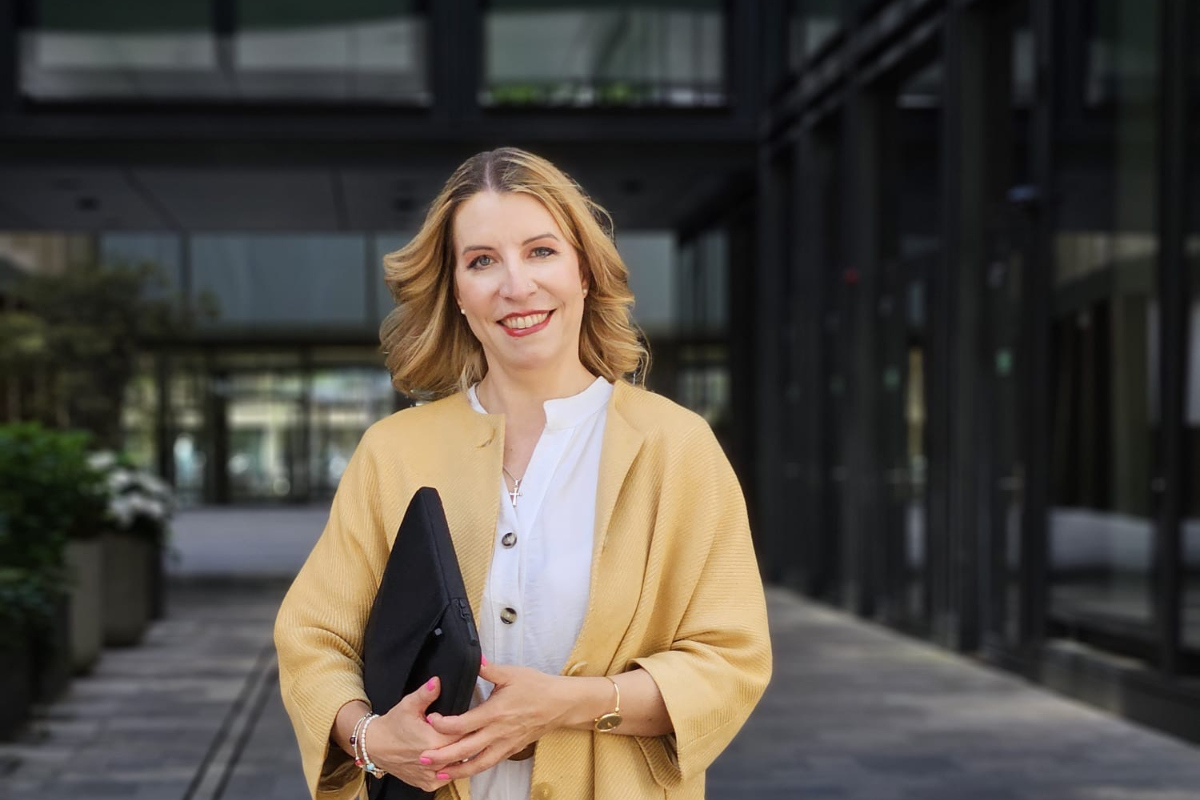
Art historian and curator Simone Töllner (Image: Christian Vogt)
Simone Töllner, Art Basel has long been more than an art fair; it is now a highly commercial event. Is art today primarily an investment opportunity, or are there still genuine collectors with a real interest in artistic quality?
Both realities exist side by side, and that tension is precisely what defines the market. Anyone who views the market purely as an asset class misses something essential. The numbers argue against a purely investment-driven logic.
Why is that?
The global art market shrank by 12 percent in 2024 to $57.5 billion and recovered only slightly in 2025, rising by 4 percent to just under $60 billion. An asset class that loses value in two consecutive years does not attract pure return hunters. People who buy today do so out of conviction.
What I experience in my work with collectors confirms this. They are collectors at heart. They do not simply want the work; they seek a personal relationship with the artist and with the work itself, regardless of price.
For them, the emotional connection matters. Often, so does the question of where a work will go and in what environment it will continue to live. Many of my collectors quite literally live with their art. That is the opposite of speculation.
What is striking is that the number of transactions has increased despite falling values. People are not collecting less; they are collecting more consciously and in lower price segments.
What role does artistic ambition still play at fairs today? Is it primarily about the market, visibility, and prestige, or also about relevant aesthetic and social positions?
It would not be a fair if it were not commercially oriented; we have to be honest about that. Artists want and need to make a living, galleries depend on their artists, and the fair gives both a platform. That is not a contradiction of artistic ambition; it is the condition that allows art to become visible.
The ambition is there; one simply has to look closely. We have sectors such as Statements, which is dedicated to emerging positions. We have Unlimited, curated this year by Ruba Katrib of MoMA PS1, which repeatedly makes deliberate statements. And we have many satellite fairs featuring young artists. In 2026, Liste presents its largest edition to date, with 106 galleries from 36 countries, and since 1996, it has been regarded as a springboard for young galleries.
Volta is entering its 21st edition and, with the so-called 5,000 Edit, is presenting a curated selection of works priced up to CHF 5,000. This segment appeals to a younger audience and often introduces artists who would otherwise have little visibility.
This interplay reveals the value of Art Week. The market finances the stage, and on that stage, space emerges for positions that want to do more than sell.
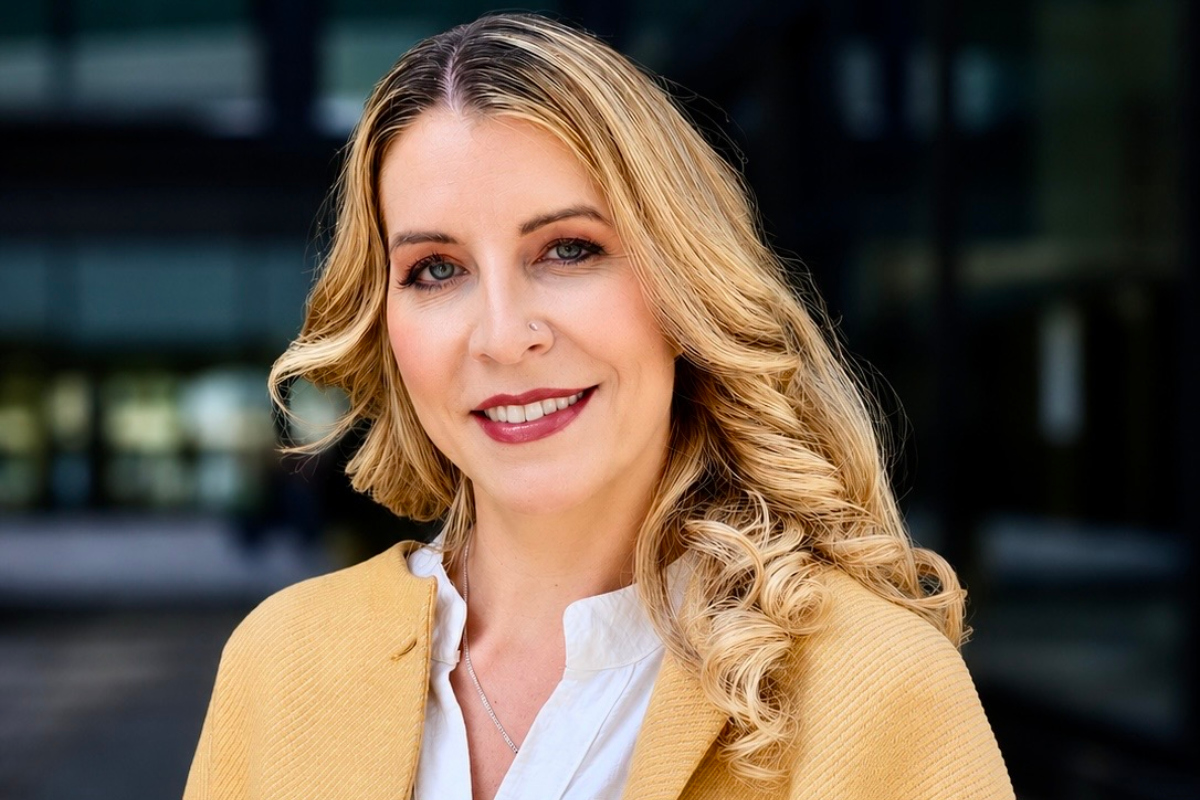
«Anyone who views the market purely as an asset class misses something essential,» says Simone Töllner. (Image: Christian Vogt)
Where do you currently see the most exciting developments in contemporary art, both thematically and geographically?
I notice that art by Indigenous peoples and by self-taught artists is finally receiving the attention it was denied for too long. That is a long-overdue correction.
African art is gaining significant momentum. Auction sales of African artists rose by 43 percent in 2025 to $70 million, and women artists account for a large share of those sales. The shift is therefore not only geographic, but also gender-related.
I have been a fan of contemporary art from Southeast Asia for years. I include Indian contemporary art in that, as well as positions from Korea, Vietnam, and Malaysia. These regions bring their own visual languages and depth. They are not measuring themselves against Western models, but drawing on their own traditions.
It is no coincidence that two of the most exciting biennials in 2026 are taking place in Asia, in Gwangju and Bangkok. It is a sign of where the centre of artistic energy is shifting. Added to this is the growing importance of the Gulf region, as shown by Art Basel’s first presence in Doha in 2026. What is most exciting about this moment is that the art world is becoming more polyphonic.
Art Basel has internationalised its model, with fairs in Hong Kong, Miami Beach, Doha, and Paris. Can Basel maintain its importance as an art location in the long term?
I want to answer that question deliberately cautiously, because serious forecasts are rare in the art market. One thing I can say with certainty is this: Art Basel will always be associated with Basel. Name and place belong together, and a connection that has grown over decades cannot simply be relocated.
Switzerland, as a location, is impossible to overlook internationally. That is not due to the fair alone, but to a dense network of museums, collections, and a long tradition of careful engagement with art.
There is also a certain prestige that should not be underestimated. The new wealth in the Middle East and Asia is real, and Art Basel is responding intelligently by going there itself rather than waiting. That does not weaken Basel; on the contrary. The place of origin becomes the anchor of an international network. How the balance of power will shift in the long term remains to be seen, but Basel has a starting position that many would envy.
Given the advances in artificial intelligence, should we be worried about the idea of genuine, authentic art? Or are we facing a fundamental paradigm shift in our understanding of what art can be?
Worry is the wrong word; attention is the right one. The market reality is more sober than the excitement suggests. In early 2025, Christie’s held Augmented Intelligence, the first dedicated AI art auction by a major institution. It achieved $728,000 and exceeded expectations. Yet in the context of a market worth almost $60 billion, that is a footnote.
What is more remarkable is who bought. Almost half of the bidders were Millennials or Gen Z, and a good third bought at Christie’s for the first time.
What do you conclude from that?
I believe a counter-movement will emerge. Even today, when people look at a work, they ask themselves: is this AI or not? That is exactly where the opportunity lies. What does not come from a machine bears witness to real craftsmanship, and that increases its value because it was created by a human being.
A few years ago, people asked the same question about NFTs, and little came of it. I suspect new artistic directions will emerge, but AI will not replace the artwork. I do not see a complete paradigm shift, but rather an expansion of the means available.
The real debate is less aesthetic than legal, because many models were trained on copyrighted material without licenses. That is the unresolved question, not whether AI-generated work can be art.
Many young people today become wealthy early through entrepreneurship, technology, or financial markets. Are you seeing growing interest in art among this NextGen clientele?
Absolutely. This marks one of the most important structural shifts in the art market. According to the «Survey of Global Collecting 2025» by Art Basel and UBS, Millennials and Gen Z accounted for around three quarters of the high-net-worth collectors surveyed.
This generation does not collect less; it collects more broadly. Gen Z allocates the highest share of its wealth to art and collectibles, around a quarter, more than any other generation. A large part of that flows into adjacent categories such as sneakers, design, and digital art. For them, the boundary between art and lifestyle object hardly exists anymore. Collecting is part of their identity.
Is this younger group of buyers also changing the art market?
They are changing it in three areas.
First, the channels. Young collectors buy online and through social media, and galleries increasingly rely on local and new buyers, who accounted for almost half of buyers in 2025.
Second, the values. For younger buyers, meaning matters at least as much as market value. They look for connections to identity, community, and attitude.
Third, the themes and media. Digital art, photography, and works on paper are gaining ground, while pure status orientation is losing weight. Collecting is becoming more participatory. In 2024, the average high-net-worth collector attended around 48 art-related events.
Conversely, are the artists who become visible in the art world also getting younger?
Tendentially, yes, but this is not new, and it is not without its downsides. It is much easier today than it was a few years ago to show art, because social media and Instagram offer a platform that did not exist in this form before. That accelerates careers.
This has created its own segment, known as Ultra-Contemporary: artists born in or after 1975. The segment is controversial, and for good reason. After the boom years, the Ultra-Contemporary market collapsed by around a third in 2025, a clear sign that much of it was speculation.
It becomes delicate when visibility and maturity drift apart. Rapid market success at a young age can fuel artistic development, but it can also burn it out. The most important task for galleries and institutions is therefore not discovery, but patient support.
How can quality, substance, and long-term potential be recognised in young artists, beyond hype and market mechanics?
You recognise hype by its speed; you recognise substance by its repeatability. There are a few reliable indicators.
First, institutional anchoring: whether museums and serious curators support a position, rather than only the auction market.
Second, consistency of the work: whether an independent language holds over several years, or whether a single successful motif is merely being varied.
Third, the quality of the gallery representing the artist, because good gallery work builds careers instead of driving up prices in the short term.
My personal criterion, and this points back to where I come from, is craftsmanship. It can also relate to a concept; it does not have to be a painting.
What, then?
For me, the decisive question is whether an artist has a signature of their own: something recognisable, a genuine distinguishing feature. With young artists in particular, I also consider their education and teachers, because that reveals a great deal about the foundation.
In the end, for me, it comes down to one question: Is there skill? Art comes from skill – or at least it should. If that foundation is sound, the rest almost follows by itself.
Simone Töllner is an art and culture manager, communications specialist, and founder of ST ART | Concepts & Consulting. Through her consultancy, she develops concepts at the intersection of art, culture, communication, and strategic positioning. She is co-founder of finews.art, a bilingual platform connecting the worlds of art and finance. With more than 14 years of experience in communication, marketing, event management, and art mediation, she has realised over 90 exhibitions and numerous cultural and corporate events. Previously, she served as Head of Marketing at swisspartners Group and Associate Manager at Häusler Contemporary Zurich.
- Read the second part of the interview with Simone Töllner on Thursday, 18 June 2026.