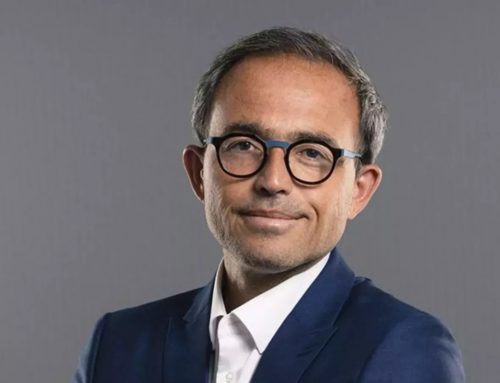

Bitcoin’s retreat from its late-2025 peak has rattled newer investors. Singapore’s seasoned crypto holders, however, are staying disciplined – keeping allocations modest, favouring established assets and refusing to chase every market swing, says Mark Wong, Head of Trading at Independent Reserve.

Gardens by the Bay in Singapore (Image: Duy Nguyen, Unsplash)
«The macroeconomic environment of 2026 has challenged some of the most familiar assumptions in portfolio construction,» says Mark Wong in a recent comment.
Geopolitical tensions have disrupted energy markets, correlations between asset classes have shifted, and traditional defensive assets have not always behaved as expected. Gold and silver, long viewed as reliable havens during periods of uncertainty, have increasingly moved in tandem with risk assets.
Oil, meanwhile, has at times behaved more like a counter-indicator than a straightforward barometer of economic strength.
Unexpected Turn for Digital Gold
Even the idea of Bitcoin as «digital gold» has taken an unexpected turn. Rather than Bitcoin fully adopting the characteristics of a safe-haven asset, gold itself has begun to trade more like a risk asset.
Against this backdrop, the most important question for crypto investors is no longer whether volatility can be avoided. It is how portfolios should be positioned to withstand it.
Painful Test For Recent Entrants
Bitcoin’s fall from around S$161,000 in late 2025 to roughly S$80,000 today has been especially painful for investors who entered near the peak. Seasoned investors are telling a very different story.
According to Mark Wong at Independent Reserve, the first cryptocurrency exchange to be licensed by the Monetary Authority of Singapore (MAS), investors who have lived through several crypto cycles are generally neither abandoning the asset class nor rushing into more speculative alternatives.
«Instead, they are maintaining relatively small positions and concentrating their exposure in Bitcoin,» says Wong.
Higher-Risk Component Within a Diversified Portfolio
Among Singaporean Gen X investors aged 45 to 54, 65 percent allocate less than 5 percent of their overall portfolios to cryptocurrencies. Within their crypto holdings, Bitcoin dominates, accounting for 82 percent – and an even higher 87 percent among Baby Boomers.
This is not the behaviour of investors treating crypto as an all-or-nothing wager. It is the behaviour of investors treating it as a higher-risk component within a diversified portfolio.
Experience Anchors
The generational contrast is striking. Half of GenZ respondents who previously owned cryptocurrency have since left the market. Among GenX investors, the attrition rate is just 15 percent.
As Wong observes, «Experience anchors conviction through volatility in a way that enthusiasm alone cannot.»
Time in the Market Matters
«The Independent Reserve Cryptocurrency Index Singapore 2026» suggests that how investors participate may be just as important as whether they participate at all.
Investors who use a dollar-cost-averaging strategy, investing fixed amounts regularly rather than trying to identify perfect entry points, report considerably better outcomes than irregular buyers. Some 55 percent of those who dollar-cost-average say they have made gains, compared with 43 percent of those who invest sporadically.
The difference is even clearer on the downside. Only 15 percent of regular investors report losses, compared with 28 percent of irregular buyers.
Subsequent Recovery
The pattern becomes stronger as investment horizons lengthen. Among investors who entered during the 2021 bull market and remained invested through the severe downturn of 2022, 51 percent are now profitable. Profitability rises to 64 percent among those who have participated in the market for six to ten years.
These investors did not necessarily predict the market correctly. Many bought before substantial declines. Their advantage was that they remained invested long enough to benefit from the subsequent recovery.
Best Days Often Occur Close to the Worst
Wong draws a parallel with traditional equity investing, where attempts to move repeatedly in and out of the market can prove costly. «Missing only a small number of the strongest trading days can substantially reduce long-term returns.»
Crypto markets may be more volatile, but the underlying lesson is similar: the best days are difficult to predict and often occur close to the worst ones.
Speculation is Losing Some of Its Appeal
Singapore’s crypto market also appears to be moving away from the most speculative corners of the asset class.
Awareness of Dogecoin has fallen by nine percentage points year on year, while memecoins more broadly are attracting less attention. By contrast, investors remain focused primarily on Bitcoin and Ethereum.
Their reasons for investing are also becoming more conventional. Portfolio diversification and access to long-term growth opportunities now rank above ideological motivations, short-term speculation, or the search for the next viral token.
No Longer a Rejection of Traditional Finance
This represents a significant evolution in the way cryptocurrency is understood. For many investors, crypto is no longer a rejection of traditional finance. It is becoming a measured allocation within it.
That does not eliminate risk. Bitcoin remains volatile, and smaller digital assets can experience even more extreme movements. But investors who recognise those characteristics can manage them through position sizing, diversification and a sufficiently long investment horizon.
Danger of Chasing Momentum
The least successful behaviours are often the most emotionally appealing: buying after a dramatic rally, rotating into altcoins because of a compelling new narrative, or attempting to predict every market peak and bottom.
Such strategies create the impression of control, but they frequently lead investors to buy when optimism is highest and sell when fear is greatest.
Favouring Assets With Established Liquidity
The more mature approach emerging from Singapore’s market is less exciting but potentially more durable. It involves defining an appropriate allocation, favouring assets with established liquidity and adoption, investing consistently, and accepting that periods of discomfort are unavoidable.
«The structural investment case for Bitcoin,» Wong argues, «remains supported by its fixed supply, expanding institutional participation and improving regulatory clarity.»
None of these factors guarantees short-term price appreciation. They do, however, provide a rationale for investors who can tolerate volatility and hold through several market cycles.
For them, the latest correction is painful, but it is not unprecedented.
Patience to Let Time Do Its Work
The central lesson is therefore not that investors must become better forecasters. It is that they may need to become more disciplined owners.
Successful participation in crypto, Wong concludes, is increasingly about «staying invested, accumulating consistently, and having the patience to let time do its work.
- Download the 6th edition of the annual cryptocurrency study by Independent Reserve (IR).