
Scale without surrender: why Switzerland’s independent wealth managers need infrastructure, strategic capital and a new consolidation model, writes Swiss entrepreneur Gilles Stuck in this second instalment of his three-part series for WealthSummit on the challenges facing the sector.

Independent wealth managers need infrastructure, strategic capital, and a new consolidation model (Image: PxHere)
The next generation of independent wealth managers will need an environment that combines the stability of an institution with the autonomy of a partnership. Building that environment requires capital that thinks in decades, not quarterly reporting cycles.
For more than a decade, industry observers have predicted a wave of consolidation in Swiss independent wealth management. For more than a decade, the sceptics have largely been right.
Patrick Dorner, the former managing director of the Swiss Association of Asset Managers, repeatedly described the much-heralded consolidation wave as a myth. Research published in the «Neue Zürcher Zeitung» went even further, arguing that such a process would probably never happen because independence is embedded in the sector’s DNA. A study by the consultancy Finalix reached a similar conclusion: very few entrepreneurs actually want to sell.
That fatigue is understandable. But the sceptics, while right for a long time, are now misreading the present.
What has changed is not the desire for consolidation. That desire never really existed, and it still does not. Independent wealth managers did not build their businesses to become branches of larger institutions. What has changed are the conditions under which the status quo can still be maintained. Those conditions are becoming harder to defend.
Force of Accumulation
FINMA’s licensing process is now complete. Between one-third and one-half of firms from the pre-regulatory era have exited the market. In practical terms, that already amounts to consolidation, even if it has taken the form of regulatory cleansing rather than classic merger activity.
At the same time, most independent wealth managers are facing a generational transition – and a significant proportion have no succession plan. On top of that, the cost of remaining genuinely competitive is rising. This is no longer merely about regulatory compliance. Investment in technology, digital infrastructure, and institutional-grade operating capabilities has moved from discretionary spending to basic survival.
Each of these forces would demand adaptation on its own. Their simultaneous convergence creates something qualitatively different from anything the sector has experienced before.
There will be no tsunami, and on that point, the sceptics are right. What they underestimate, however, is the cumulative force of a steady tide.
Recent deal activity suggests that this tide has already begun to rise. Swiss Life acquired Zurich-based ZWEI Wealth in early 2025. Ticino-based PKB Privatbank merged with Zurich wealth manager Belvoir Capital. In 2024, Swiss private bank EFG International acquired Geneva-based Cité Gestion.
PwC counted nine publicly announced transactions involving independent wealth managers in the first half of 2025 alone. Many more changes of ownership never made it into the public domain.
What Actually Works
Deloitte expects between 30 and 50 such transactions a year and estimates that between 500 and 1,000 firms could leave the market over the coming decade. The more important question, however, is not whether consolidation will happen. It is what kind of consolidation will actually serve the market.
The answer depends on what clients chose when they deliberately selected an independent adviser in the first place: a person, a relationship, and advice free from product mandates, institutional politics, and forced client segmentation.
Any model that severs that personal bond, turns entrepreneurs into employees, and replaces advisory judgement with standardised corporate processes is likely to fail. Clients who left banks consciously will simply leave again.
What does work is the centralisation of operations, compliance and technology in a way that gives the client adviser more time, better tools and stronger support – not less independence. The distinction between a platform that provides operational backing and an acquisition that removes autonomy is not semantic. It is strategic.
Most well-run independent wealth managers have already solved the basic operational challenge. They outsource compliance to specialist providers, rely on external accounting and financial services, connect to custodian banks through standardised interfaces and differentiate themselves through demonstrable investment competence. This model works, and it reflects genuine entrepreneurial discipline.
Limits of Outsourced Patchwork
The limit of this model is not operational. It is strategic.
A patchwork of separately purchased services can hold a firm together from a regulatory standpoint. But it cannot necessarily deliver what demanding clients increasingly expect: integrated advisory depth across institutional alternative investments, succession planning, philanthropic structures and broader family office-style services.
This is where the market is moving. Projections by strategy consultants, based on estimates at the upper end of the current range, suggest that the Swiss independent wealth management channel could grow from around 650 billion francs today to more than 900 billion francs by 2029.
That growth will be captured by firms with integrated platforms – not by those managing an ever-longer list of disconnected suppliers.
The US offers an instructive, though imperfect, comparison. Over the past two decades, the American market for registered independent investment advisers has undergone rapid consolidation. The prevailing model often involved minority or partial acquisitions, preservation of firm autonomy, and centralized support services.
The most revealing case began as a start-up concept in 2006 and grew into a multi-billion-dollar company: Focus Financial Partners. With more than 80 partner firms, Focus went public and was eventually taken private again at a valuation of more than $7 billion. The model demonstrated that extraordinary scale can be achieved by taking stakes in independent firms while preserving their brands and client relationships.
Yet the example also came with a warning – and one Switzerland should take seriously. Public markets struggled to assign the right value to a federation of roughly 90 independent firms that, despite its size, could not present itself as a coherent operating company. Organic growth metrics remained opaque. And when cheap financing disappeared and sellers became more sophisticated, the valuation arbitrage narrowed.
Patient Capital, Not Short-Term Exit Logic
The lesson is not that federated consolidation is doomed. The lesson is that pure multiple arbitrage – buying small firms cheaply and hoping they are valued more highly as part of a larger group – is not a sustainable business model.
To build something durable, platform economics matter. Shared technology matters. A degree of operational integration beyond mere financial participation matters.
The Swiss market needs a version of this model adapted to local regulation and culture. It also needs patient capital behind it. Whether that capital comes from a family office, a long-term institutional investor, or a specialised investment firm is secondary. What matters is that the investor’s time horizon matches the client relationships it is financing.
Anyone who treats wealth management as a five-year arbitrage trade has misunderstood the nature of the business.
The succession issue also deserves a more open conversation than the industry usually allows. More than 60 percent of founders will need a succession solution within the next three to five years; 28 percent have no plan. According to recent recruitment research, the sector needs roughly 1,000 additional client advisers merely to maintain existing client coverage.
A poorly planned succession process can destroy client relationships that took decades to build.
The next generation of independent wealth managers will need an environment that combines institutional stability with partnership-style autonomy. Creating that environment requires capital that thinks in decades, not in quarterly reporting cycles.
Narrowing Window
Switzerland’s independent wealth management industry does not need rescuing. What it needs is infrastructure, scale and strategic capital – delivered in a way that respects the entrepreneurial character that makes the sector worth preserving in the first place.
The window in which these decisions can still be taken from a position of strength is narrowing.
The firms and platforms that strike the right balance will write the next chapter of Swiss independent wealth management. Those that confuse consolidation with absorption will learn the same expensive lesson others have learned before them – and disappear.
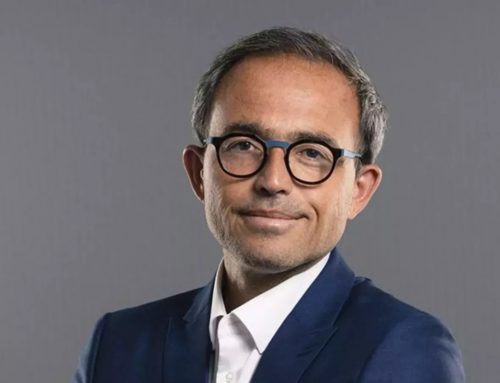
Gilles Stuck is an entrepreneur in independent wealth management. He was previously Head of Switzerland at Julius Baer and has more than 20 years of experience in Swiss banking.
- Read the first part of the series here: «The Five-Year Countdown for Switzerland’s Independent Wealth Managers»