The world’s conflicts could intensify in the weeks and months ahead – and some may reach a breaking point, financial expert and political strategist Beat Wittmann warns in his latest WealthSummit opinion piece.

Breaking point in financial markets (Image: Pexels)
Today’s largely complacent global capital markets are expected to enforce adjustments to these new realities. The bond markets have already led the way to a large extent. US and G7 government bond yields have risen to their highest levels since the 2008 global financial crisis.
Equities have so far held up, mainly for two reasons. First, global economic growth has remained resilient and corporate earnings have been strong, led by the US technology and financial sectors. Second, markets continue to rely on the “Trump Put”: the expectation that US President Donald Trump will eventually blink regarding his war against Iran, as persistently rising oil prices feed back into a higher cost of living in the US and darken the Republicans’ prospects in the upcoming midterm elections.
The fundamental investment stance remains unchanged: although global equities are at high risk of an overdue correction, equities remain the medium- to long term asset class of choice. Regarding fixed income and currency, experts continue to strongly recommend remaining invested in one’s own geographic region. There remains no reason at all for European investors to invest in US government and corporate fixed income and the Dollar.
Middle East Escalation, and the Limits of US Power
The second war of escalation and proliferation after Russia’s war against Ukraine and Europe is the Middle East, where the US and Israel’s war of choice against Iran has already generated manyfold intended and unintended consequences across the region, exposing the Arab States of the Gulf while demonstrating the limits of US security guarantees.
Oil exports and trade have been dramatically reduced through the Strait of Hormuz and, now, through the Iranian-backed Houthi rebels also in the Strait of Bab al-Mandeb. The resulting pressure on oil prices is transmitted directly into cost-push inflation and the cost of living across the global economy. The Middle East therefore illustrates the broader geopolitical transformation: military power remains decisive, but economic interdependence, energy and food security, financial markets and alliances increasingly determine the limits of that power.
Forced to Blink
I reemphasize my longstanding view that the US stands a near-zero chance of getting its way on Iran. Iran is now governed by a de facto military dictatorship by the Revolutionary Guards, while the population does not care much whether the Supreme Leader even exists, as this would reduce the much-hated clerics to symbolic relevance. I therefore expect Trump’s hand to be forced to blink and walk away by persistently high oil prices and volatile and falling capital markets.
Realistically, nobody will gain military dominance in the Middle East, and the situation will once more settle into transitional arrangements. Structurally, the US remains the indispensable security power, but credibility and trust have been lost. All relevant players will therefore seek to further reduce their dependence on the US and diversify into alternative cooperation partners and alliances, such as the Mecca Accord between Pakistan, Saudi Arabia and Turkey.
Supercycle of Geoeconomic Fragmentation and Financial Repression
I reemphasize that the dominant theme in geopolitics, the global economy and capital markets for 2027 and beyond is geoeconomic fragmentation and financial repression, with the US, China and Europe at their respective geographic regional epicenters.
The old global order – China exporting and dumping record high surplus production while not consuming domestically, the US relying on deficit spending and foreign creditors, and Europe exporting to China, importing cheap energy from Russia and relying on the US security umbrella – is over for good.
The US fiscal trajectory is unsustainable, and Debtor-in-Chief Trump, with the full support of Treasury Secretary Scott Bessent, but not FED Chair Kevin Warsh, is determined to make it worse. Instead of bringing its house in order by cutting spending and raising taxes, the US is leveraging and betting its house through continued creative financial engineering and mounting coercive financial repression.
This has incentivized and, at times, forced foreign creditors to reduce their dependency on the US, with China leading the way. Europeans have two reasons to disinvest from US Treasuries. First, the US has become a growing risk regarding counterparty credit and the repeated weaponization of financial relationships. Second, Europe is a better sovereign credit than the US and, importantly, has no external financial dependency. It very much needs its own savings redirected and invested within Europe to build and grow sovereignty in defence, critical infrastructure, technology and capital markets.
The transmission mechanism from geopolitics into markets is therefore becoming direct: wars and geopolitical confrontation feed into global trade and supply chains, oil and natural-resource prices, inflation and interest rates, and ultimately into global capital markets, including bonds, currencies and equities.
Geopolitics Led by Predators
Europe is undergoing its most serious security stress test since 1945. The post-war security architecture, including the Helsinki Final Act of 1975, is over for good. While Europe has provided decisive political, military and financial support to Ukraine since 2022, its military doctrines, procurement systems and armed forces have not adapted to the requirements of fast-evolving modern warfare.
Russia is economically and financially cornered, but its leadership retains both the expansionist ambition and the military capacity to escalate. Europe therefore needs to realize the type and scale of the threat, call it what it is, and respond accordingly. The strategic objective cannot be limited to supporting Ukraine. It must be to stop and contain Russian aggression and prevent Russia from establishing a new European security order in which it possesses a veto over the sovereignty and strategic choices of other European states.
At the same time, Europe faces a broader geopolitical transformation. It is confronted by a coordinated Russia-China-Iran-North Korea axis, with China providing economic and technological support to Russia while placing pressure on European industry through excess capacity and exports.
Europe is also exposed to both the US and China through the weaponisation of economic dependencies – from energy and critical minerals to artificial intelligence and technology, tariffs and trade, supply chains and financial infrastructure. Paradoxically, both Vladimir Putin and Trump have accelerated Europe’s realisation that it must take full responsibility for its own security.
In defence and finance, Europe will have to use coalitions of the willing and majority voting rather than allowing unanimity requirements to block and delay essential decisions. This has been communicated by the European Commission President Ursula von der Leyen in her recent State of the Union speech and is to take effect from 2027.
Wars, Elections and the Global Transmission Mechanism
Several key elections coincide with wars on various fronts: military wars, cold wars, political wars, societal wars, economic and trade wars, capital and currency wars, and AI wars. German regional election in Mecklenburg-Vorpommern ended in another huge win by the far-right AFD and an electoral disaster for Germany’s governing coalition headed by Chancellor Friedrich Merz, who has been too timid to engage in deep and overdue structural economic reforms. General elections in Russia this past weekend yielded the predicted and predictable results of fully endorsing Putin, and it remains to be seen whether there will be a larger war mobilization initiative. Next in line are legislative elections in Israel on 27 October and the US midterm elections on 3 November 2026.
But we should not overestimate the importance of the US midterm elections. No matter the outcome, Trump’s foreign policy, wars of choice, and political blackmail and economic coercion towards alliance partners are likely to get worse in the case of his party losing the midterms, as he would become more constrained in US domestic policy.
Rearm Europe
Europe needs a much clearer public awareness, understanding – and communication – of the sheer scale and fundamental persistence of the Russian threat. European intelligence services have for years documented and communicated Russian military aggression, espionage, sabotage, disinformation, political meddling and state-sponsored terrorism.
The language used to describe this challenge also matters. The increasingly overused technocratic terms “hybrid warfare” and “asymmetric warfare” are obscuring the reality: Russia is conducting, daily, state-sponsored aggression and terrorism against European countries, institutions and corporates in the military-industrial space.
Europe needs to provide maximum military, financial, infrastructure and humanitarian support for Ukraine; accelerate European defence spending and production; expand air-defence and long-range precision-strike capabilities; deploy unmanned systems and consolidate command structures; strengthen European military mobility and readiness; and significantly tighten sanctions and economic and financial pressure on Russia.
Europe needs the ability to jointly finance and procure the strategic military capabilities that constitute true European collective goods. National defence budgets should therefore be complemented by European-level financing for common strategic enablers such as intelligence, surveillance and reconnaissance, satellites and space capabilities, transportation, and command-and-control systems.
Capital is Power – Security is Sovereignty
Europe is establishing the foundations of strategic autonomy in two critical areas: capital and defence. It needs a genuine European Capital Markets Union – or, in politically more acceptable terms, a European Savings and Investment Union. The latter terminology matters. Words such as “capital”, “markets” and “union” resonate less favourably with large parts of the population and political spectrum than “savings” and “investment”. The objective, however, is the same: to redirect and mobilise Europe’s enormous pool of savings.
At the same time, Europe needs to overcome fragmentation in the defence sector and translate its economic size and strength into military deterrence and readiness. Political leadership in Brussels and national capitals will quite rightly come under pressure to deploy European taxpayers’ money to finance and build European defence capabilities and capacities rather than procuring US aerospace and defence equipment, as is unfortunately so far largely happening in the ongoing 90 billion euros European financial support package for Ukraine.
Together, these two pillars would provide Europe with the sovereignty required to act as a geopolitical power in its own right, rather than as a residual power caught between US-China strategic rivalry. The objective is not European isolation or a retreat from the transatlantic alliance. It is to ensure that Europe has the capacity to act independently when its interests and security require it. That would also be in the best interests of Europe’s overseas alliance partners, notably the US.
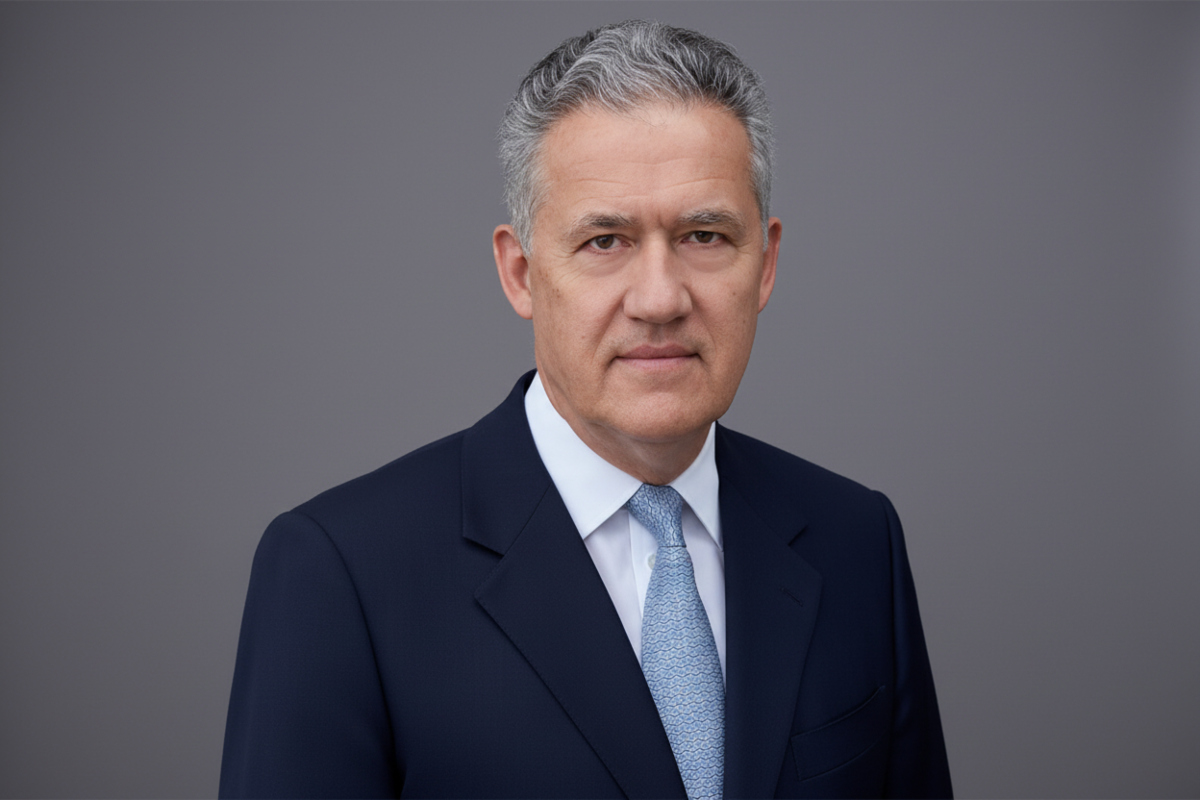
Beat Wittmann is the Chairman and a Partner at Porta Advisors, Zurich, and Chief Investment Strategist at Bauval Investment Partners, Geneva. He is also a co-founder and board of trustees member of the Sovereign Europe Forum.