
Independent wealth managers should not be seen as competitors to banks, but as part of an increasingly specialised wealth management ecosystem, argue Andreas Luder and Marco Haas of Lumen Capital (Switzerland). In an interview with WealthSummit, they explain why clearer distinctions between advice, strategy, custody and execution can benefit both clients and banks.
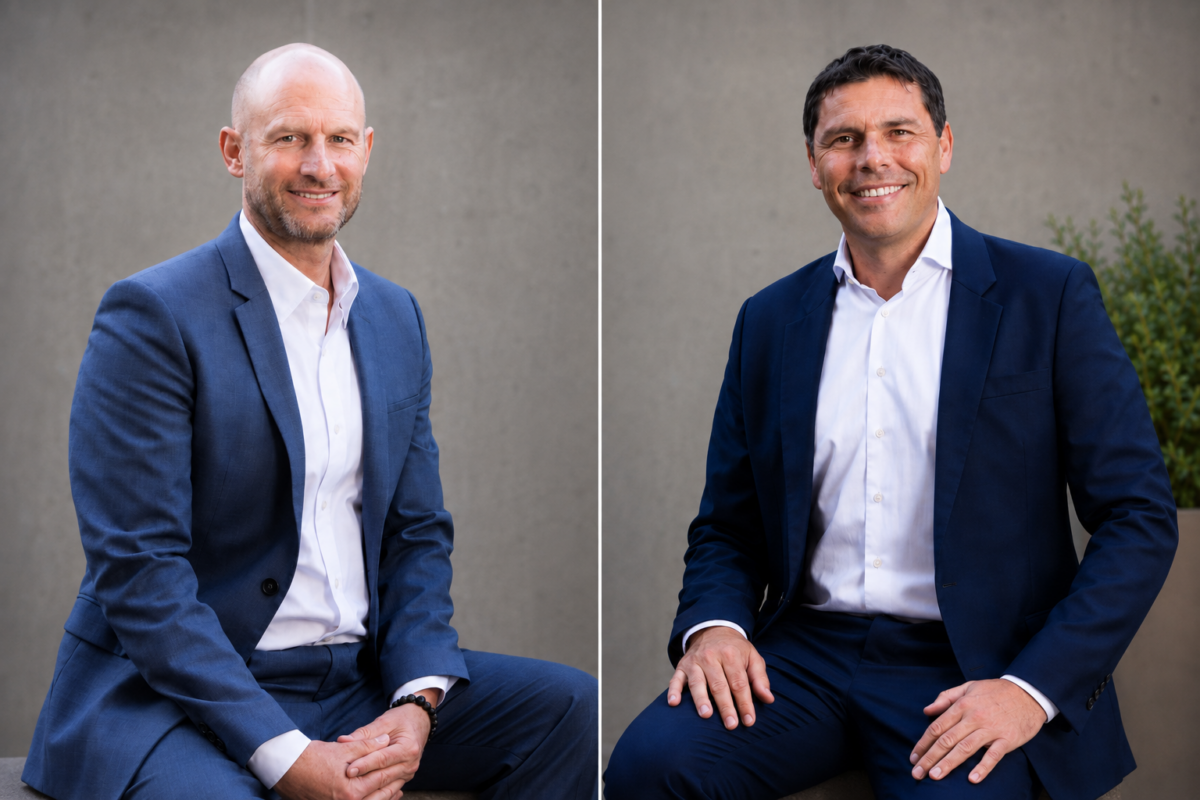
Marco Haas (left), Partner, and Andreas Luder (right), CEO and Partner, Lumen Capital Switzerland (Photo: supplied)
Gentlemen, in Swiss private banking, independence is often presented as an alternative to the traditional bank model. Is that the right way to look at it?
Andreas Luder: No. That interpretation is too simplistic. Independence does not mean positioning ourselves against banks. Banks remain central to wealth management. They provide custody, execution, financing, trading infrastructure and a range of specialised services.
The difference lies in the role we play as an independent asset manager.
What is that role?
We focus on personal advice, portfolio construction, strategic wealth planning and the long-term management of the client relationship.
Marco Haas: For the client, this creates a clear division of responsibilities. The bank provides the platform and infrastructure. We look at the client’s overall wealth situation, define investment objectives, assess solutions from different providers and coordinate implementation.
It is therefore less a question of competing with banks than of defining the respective roles more clearly.
What does that mean in practice for wealthy individuals, entrepreneurial families or internationally oriented clients?
Haas: Many clients still value the stability, expertise and infrastructure of established banks. But they may not want their entire investment strategy to be determined by one institution.
Under our model, assets remain custodied with one or several banks, while Lumen Capital provides the advice, develops the investment strategy, selects suitable solutions and monitors the portfolio.
As a boutique, each partner typically works with a relatively limited number of clients. That allows us to spend more time understanding their personal circumstances, financial structures and objectives.
Luder: For sophisticated clients, this provides another advantage: they can retain access to banking services without being tied to a single institution’s advisory or product framework.
We can compare custodian banks, investment products, services and market views and combine them where appropriate. The starting point is the client rather than the offering of a particular institution.
Lumen Capital (Switzerland) was founded in Zurich in 2021 and is licensed by FINMA. How do you position the firm today?
Luder: Lumen Capital is an independent Swiss wealth management boutique with offices in Zurich and Wollerau in the canton of Schwyz.
We take a broad view of a client’s wealth rather than looking at individual portfolios in isolation. The objective is to develop a long-term wealth strategy based on the client’s personal circumstances, needs and objectives.
Haas: The personal relationship is important. Clients work directly with experienced advisers who remain closely involved in the investment process and accountable for the relationship.
We deliberately want to avoid an anonymous platform model. Responsibilities should be clear and decision-making should remain efficient.
«Open architecture» is one of the most widely used terms in wealth management. What does it mean at Lumen Capital?
Luder: In our case, it means that we do not manufacture our own investment products and are not tied to an internal product universe.
The process therefore does not begin with the question of which product should be sold. It begins with an assessment of the client’s situation and the solutions that may be appropriate.
Does this model not reduce the economics for banks?
Haas: Not necessarily. Independent asset managers bring assets, transactions and long-term client relationships onto bank platforms.
At the same time, they can take responsibility for parts of the advisory relationship that are highly personalised and resource-intensive. From that perspective, it is a form of specialisation.
Luder: It can also create opportunities for banks. The dialogue with the client can improve when strategy, structuring and execution are clearly separated.
The bank remains an important part of the relationship, but it does not necessarily have to control every aspect of it.
How is the investment process at Lumen Capital structured?
Haas: It is active, structured and disciplined, and it is based on the client’s objectives and risk profile.
The aim is not to react to every short-term market movement. It is to construct robust portfolios and ensure that investment decisions can be clearly explained. Ultimately, the objective is to create value over the course of a market cycle.
An independent manager also has to demonstrate how decisions are made and how potential conflicts of interest are handled. That requires clear processes, analysis, risk management and regular portfolio reviews.
Independence should not be confused with discretion without discipline. If anything, it increases the need for a rigorous investment process.
How is the market for independent asset managers developing in Switzerland?
Luder: The industry is becoming considerably more professional. Regulatory requirements, technology, reporting and organisational standards have all become more demanding.
At the same time, there is demand from clients for advice that is less product-driven and more closely aligned with their overall financial interests. That creates opportunities for independent managers with the necessary scale, expertise and infrastructure.
Haas: For clients, the question is increasingly which combination of services produces the best outcome: the banking platform, independent advice, personal accountability and access to specialist expertise.
Wealth management is therefore becoming more of an ecosystem. That is the environment in which we see Lumen Capital operating.
What role does Lumen Capital want to play within that ecosystem?
Luder: We want to combine the capabilities of established financial institutions with independent advice, open architecture and personal responsibility.
Haas: Ultimately, clients judge a wealth manager on the quality and continuity of the relationship. Our role is to understand the client’s situation, structure it, assess available solutions critically and remain accountable over the long term.
That extends beyond portfolio management to the broader organisation of a client’s wealth.
Andreas Luder has been CEO and Partner at Lumen Capital (Switzerland) since June 2022. Before joining the firm, he spent more than 25 years at UBS Wealth Management in Switzerland and internationally. Early in his career, he worked in Singapore as a relationship manager for Southeast Asian private clients. After returning to Switzerland, he held several positions within UBS Wealth Management and, during his final ten years at the bank, advised wealthy Swiss clients and their families. He holds a Master’s degree in Economics from the University of Zurich and is a Certified Wealth Management Advisor (CWMA) for the Swiss market.
Marco Haas has been a Partner at Lumen Capital (Switzerland) since June 2025 and advises private clients in Switzerland. He has more than 20 years of experience in domestic and international wealth management. Haas began his career in UBS’s international wealth management business in 2004. From 2010 to 2014, he was involved in establishing and building a private bank in Zurich. He subsequently spent ten years at UBS, where he advised wealthy Swiss clients as a senior relationship manager and also served as a team head. He holds a Master’s degree in Economics from the University of St. Gallen (HSG), is a Chartered Alternative Investment Analyst (CAIA) and a Certified Wealth Management Advisor (CWMA) for the Swiss market.