Evergreen funds may be easy to add to the product shelf, but they are far harder to operate. In his guest contribution, Titanbay’s Timo Paul explains why the daily handling of subscriptions, redemptions and liquidity constraints – not merely fund selection – will determine which wealth managers succeed in the fast-growing market.
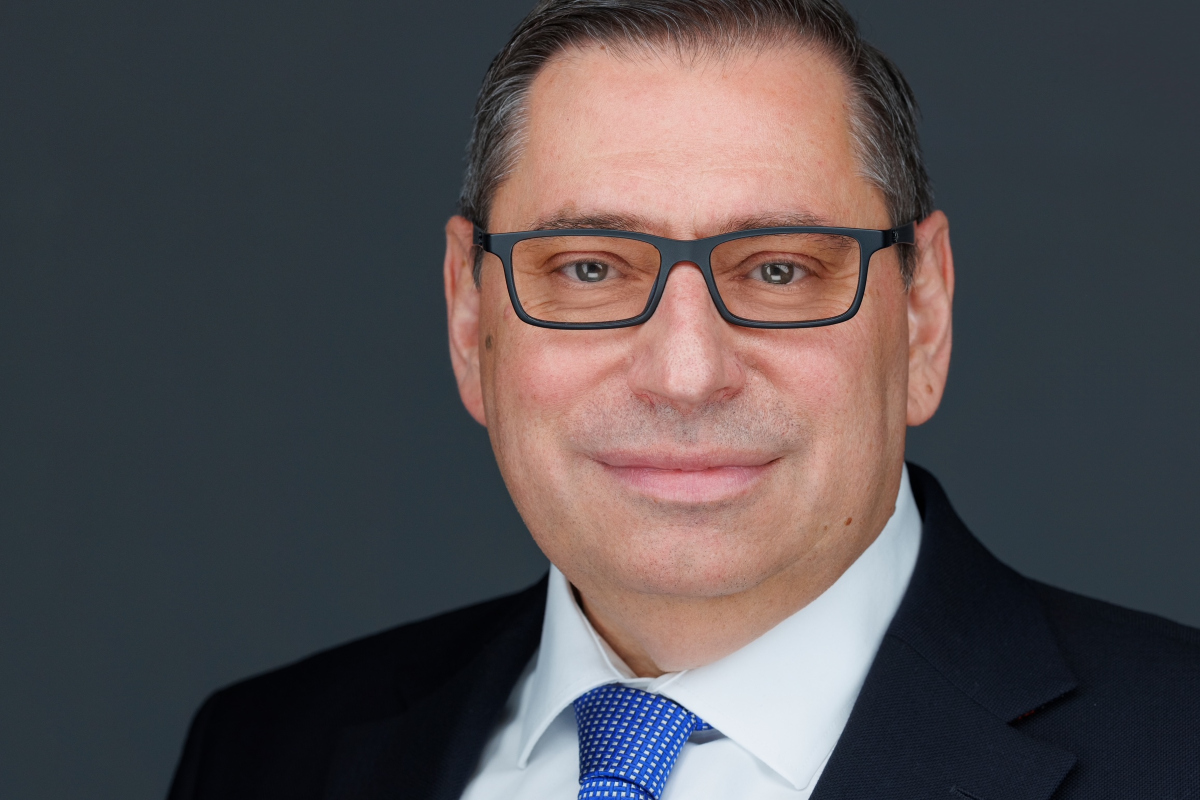
Timo Paul (Image: Titanbay)
I spend most of my week in conversations with private banks and wealth managers across Switzerland and Europe. The mood around private markets has changed. Two years ago, the question was whether evergreen and semi-liquid funds belonged in a private-client portfolio at all. Today, nobody asks me that. They ask how quickly they can get them on the shelf.
That is the right instinct. But in the rush to say yes to the product, one thing is being underestimated—and it is the thing that will ultimately decide who wins. Most wealth managers are underwriting a trading operation they cannot yet fully see. Choosing a good fund is a single decision. Running it is a trading operation that never stops.
When the Gate Goes Up
Let me start with the moment it goes wrong, because it is instructive.
A client wants to redeem. They have read the words «semi-liquid» and expect their money on the usual cycle. But the fund has reached its quarterly redemption cap, the gate is up, and they receive only a fraction of what they requested – or nothing until the next quarter.
The decision to gate was not yours. It was taken inside a fund you distribute but do not run. Yet you are the one on the phone. You built the relationship, you hold the relationship, and you will keep or lose it depending on how that call goes.
The manager sent a notice. You inherited a client problem. That call is rare. What makes it possible – or avoidable – is not rare at all. It is the fund’s daily trading in the months beforehand: the part nobody talks about because it is not glamorous.
Hidden Trading Desk
Here is what changes with an evergreen fund. A closed-end fund calls capital in tranches over a fixed period and then leaves you largely alone. An evergreen fund never stops.
During every dealing cycle, whether monthly or quarterly, you process a fresh flow of subscription and redemption orders for as long as the fund exists. That is not simply a product on a shelf. It is a trading desk you have quietly signed up to run.
Each order is also more involved than it appears. Before it can be placed, eligibility and suitability must be checked at the point of trade – not assumed based on an onboarding form completed two years ago. The rules differ by fund, jurisdiction and investor type.
Then comes the part that quietly breaks many operations: aggregation and disaggregation. Dozens of individual client subscriptions and redemptions must be netted and placed as a single order at nominee level, in accordance with each fund’s dealing calendar and cut-off times. Once the trade has been completed and the NAV struck, that single fill must be disaggregated back down.
The correct units and price must be assigned to each client. Partial fills and pro-rata gating must be divided fairly among them, and every position must be booked cleanly into the wealth manager’s core system – Avaloq or whichever platform it uses.
Get the aggregation wrong, and you miss a cut-off. Get the disaggregation wrong, and your clients’ valuations are incorrect. That is not a mistake you can afford to make even once.
Now do that across several funds, a few hundred investors and multiple jurisdictions, during every single cycle, indefinitely.
This is where the promise to the client is either kept or quietly broken. It is also where the economics lie. The industry remains strikingly manual: in a 2025 survey, 48 percent of fund managers said they conducted investor due diligence using spreadsheets and email. In Europe, the figure rose to around two-thirds, while only 2 percent were satisfied with their technology stack.
Process a €50,000 order manually, and the cost of serving it eats into the margin – precisely in the smaller-ticket segment where demand for evergreen funds is growing fastest.
More Volume, More Pressure
Volumes are rising quickly. In the US, semi-liquid evergreen funds are approaching $500 billion in assets, an increase of more than 30 percent in the year to September 2025.
In Europe, ELTIF assets reached approximately €34 billion at the end of 2025, up around 55 percent year on year, while the number of fund launches doubled. Global consultancy Bain & Company expects individual investors’ allocations to alternatives to roughly triple, reaching around $12 trillion by 2032.
More funds mean more first-time investors and more orders during every cycle. Late 2025 also demonstrated what happens when flows move in the opposite direction. Partners Group capped redemptions from an evergreen vehicle at 5 percent of NAV per quarter after redemption requests reached approximately 9.8 percent. Redemptions from business development companies rose by 217 percent quarter-on-quarter in the fourth quarter.
When redemption orders spike, the trading operation is tested in public. And it is the wealth manager – not the fund manager – who faces the client.
You Pick the Fund – You Own the Execution
Here is the asymmetry at the heart of the issue. When selecting an evergreen fund, wealth managers conduct due diligence on the manager, the strategy and the terms. All of that is sensible. But almost nobody conducts due diligence on the activity they will actually be performing every week: trading the fund, order by order, under whatever conditions the market delivers.
Choosing a good manager is not the same as being able to trade that manager’s fund cleanly through a busy or volatile cycle. These are different questions, and the wealth manager owns the second one whether it planned to or not.
Before adding an evergreen fund to the shelf, I would therefore ask five questions about the trading operation – not the investment strategy:
- When dozens of client orders are aggregated into a single fund order, how are the fill, pricing and any pro-rata gating disaggregated back to each client and booked into my system without my team doing it manually?
- Is eligibility checked on every order at the point of trade, or only once during onboarding and then assumed thereafter?
- How are orders managed against each fund’s dealing calendar and cut-off times across all the funds I offer, without my team tracking every deadline manually?
- When a gate or soft lock applies, what happens to my client’s specific order, and who explains it to them?
- What does it cost me to process a single €50,000 order, and does that cost improve as volumes grow – or become worse?
If the answers are vague, you are not merely buying a semi-liquid fund. You are taking on a trading operation you cannot yet see.
The Operating Engine Behind the Fund
This is the problem we built the Titanbay TradeEngine to solve: not fund selection and not the underlying assets, but the day-to-day trading of these funds at scale.
The wealth manager submits orders through the platform it already uses. The TradeEngine does the rest.
It checks investor-level eligibility for every order, enforces each fund’s specific rules, soft locks, cut-off times and rollover provisions, aggregates client orders into a single nominee-level order, and then disaggregates the fill and pricing back to each client.
When redemptions are gated, the system automatically handles the pro-rata allocation. Clean, bookable outcomes are returned directly to the wealth manager’s system.
Each fund’s rules are encoded once and applied automatically to every transaction across every connected wealth manager. Users receive an order view, dealing calendars with subscription and redemption cut-offs clearly mapped out, and the ability to click from a trading position directly through to the underlying client orders.
In short, it provides the control a trading operation requires without the additional headcount demanded by a manual process. The commercial model also matters. The asset manager funds the infrastructure, allowing the wealth manager to access it without adding to its cost base. That is deliberate. It removes the friction that has held back adoption for years.
Waiting Is Not the Answer
I want to be very clear, because I am an optimist about this market. None of this is an argument against evergreen funds.
The growth is real. Clients genuinely want access, and the regulatory direction – with ELTIF 2.0, AIFMD II and the LTAF – is firmly supportive. Firms that sit this out will lose ground to those that implement it well. My argument is simply that «doing it well» is a trading and operations question, not merely a product question.
The winners in the next phase will be the wealth managers that treat day-to-day trading as their own responsibility and put the right infrastructure behind it, rather than hoping the manager’s back office will hold.
Because when a valuable client asks for their money during a difficult quarter, the answer will depend on how well the fund was traded during all the quarters before it. I would rather that were in your hands – and ours – than left to someone you have never met.
Timo Paul is Head of Switzerland at Titanbay, where he leads the company’s Swiss business and works with private banks and wealth managers to develop and scale their private-markets offerings. He joined Titanbay in August 2025 after more than two decades in the Swiss asset-management industry. He also chairs Titanbay’s renowned Swiss Advisory Board.
London-based Titanbay is Europe’s fastest-growing private markets infrastructure provider, offering asset managers and distributors a simpler, more controlled way to deliver private markets.