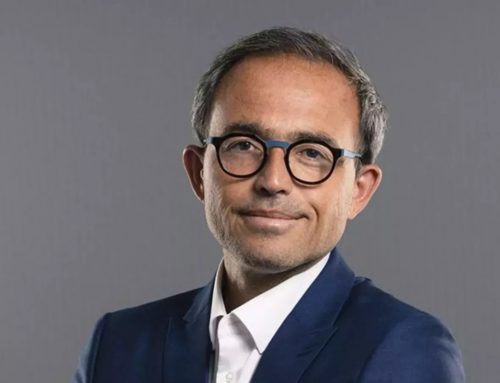

Renewed confidence, fresh opportunities, and international ambitions are driving Lugano’s financial revival. This year’s Lugano Finance Forum will highlight this resurgence, says Riccardo Esposito, Founder and CEO of FinLantern, which connects more than 65,000 financial professionals across Switzerland and Italy and has organized the Forum for 15 years.

Bird’s-eye view of the city of Lugano (Image: Lugano Tourism)
WealthSummit is a media partner of the Lugano Finance Forum.
Riccardo Esposito, you have been speaking of a genuine revival of Lugano’s financial center for some time. What is driving this resurgence?
Over the past 18 months, we have witnessed a shift that, from our vantage point, is impossible to ignore. FinLantern works closely with asset managers, banks, family offices, wealth managers, fintech companies, and financial institutions seeking to expand their businesses in Switzerland and Italy.
During this period, demand for events and initiatives targeting Ticino’s financial community has been roughly three times higher than the average over the previous five years, according to our figures. But what strikes me most is not simply the number of inquiries. It is the change in how the market responds.
What exactly has changed?
We are seeing stronger attendance at meetings, greater interest in new strategies and services, and, above all, a significantly higher conversion rate from initial invitations to actual investments in the opportunities presented.
To me, this signals something very clear: Ticino’s financial professionals have rediscovered their appetite for exploring the market and pursuing new opportunities.
Why do you say «rediscovered»?
Because for many years, much of the financial center’s energy was consumed by entirely different challenges. The end of banking secrecy, tax amnesties, the regularization of assets, mounting regulatory pressure, new industry standards, and rising compliance costs brought about a profound cultural transformation. For many institutions, particularly smaller ones, the priority became adapting, reorganizing, controlling costs, and, in some cases, exploring consolidation or alternative operating structures.
Inevitably, this diverted attention from the core business: serving clients, constructing portfolios, managing risk, and generating returns.
Today, I believe much of that transformation has been absorbed. Financial professionals are once again asking themselves: What new solutions can I offer my clients? Which investment strategies should I be exploring? Where can I generate returns? How can I diversify risk more effectively? This is precisely where we are seeing renewed demand for insights, products, and professional relationships.
So regulation, initially perceived as a burden, has ultimately helped professionalize the financial center?
I believe the process was painful, but it has produced a fundamentally different financial center. Ten or 15 years ago, Ticino’s private banking model looked very different. Today, clients are better informed, competition is more intense, and the ability to create value through expertise, asset allocation, and risk management has become essential.
Meanwhile, a new generation of financial professionals has emerged. Some developed their careers locally, while others arrived from international financial centers, bringing new expertise, investment perspectives, and more sophisticated approaches to client relationships.
Some of these professionals have gained significant market share and emerged as influential players in the local industry. In my view, this is one of the key drivers behind the renewed vitality we are witnessing today.
Are there tangible signs that this revival extends beyond FinLantern’s own observations?
Absolutely, and I think this is particularly important. In recent months, we have seen new players establish themselves in Lugano or strengthen their existing presence. This trend spans both traditional wealth management and the emerging world of digital finance. That does not mean the challenges have disappeared or that the financial center has suddenly returned to its former glory. But it does suggest that the direction has changed.
And when financial institutions, professionals, and entrepreneurs begin looking at a financial center with renewed interest, a virtuous cycle emerges: expertise, capital, clients, and new services are attracted to the market.
How significant has Lugano’s Bitcoin and blockchain strategy been in driving this transformation?
In my opinion, very significant – even beyond the sector’s direct economic contribution. The city’s decision to position Lugano as an international hub for Bitcoin, blockchain, and digital assets has had a powerful reputational impact. It has sent a clear message to the outside world: Lugano is a financial center that embraces innovation. And in today’s wealth management industry, that matters.
Sophisticated investors no longer think exclusively in terms of stocks and bonds. Their investment universe includes private markets, hedge funds, private credit, real estate, commodities, gold, infrastructure, and digital assets.
Lugano is developing the reputation of an ecosystem where these different investment categories can coexist within Switzerland’s regulated financial environment. For international clients seeking diversification, this openness to innovation is a compelling advantage.
So Bitcoin is not replacing traditional private banking – it is complementing it?
Exactly. It would be a mistake to think Lugano should simply reinvent itself as a «crypto city.» The financial center’s real strength lies in combining its longstanding tradition of private banking and wealth management with an openness to new investment opportunities and emerging technologies. Clients can continue investing in bonds, equities, and conventional funds while gaining access to expertise in private equity, real estate, gold, alternative investments, and digital assets.
In my view, this ability to bring different investment worlds together could become one of Lugano’s most distinctive competitive advantages.
And what role does Lugano’s relationship with Italy play in this new positioning?
Italy naturally remains fundamental. Lugano enjoys geographical, linguistic, and cultural advantages that are difficult for Switzerland’s other major financial centers to replicate.
However, I firmly believe that its future appeal can no longer rely on the business models of the past. It must be built on the quality of asset management, the stability of the Swiss jurisdiction, investment diversification, and the ability to provide expertise that genuinely justifies choosing Switzerland. Moreover, in an increasingly unstable geopolitical environment, country-risk diversification has once again become a major consideration – and not just for Italian investors.
Tax and regulatory changes in the United Kingdom, geopolitical tensions, and the growing international mobility of high-net-worth individuals are intensifying competition among jurisdictions seeking to attract wealth, entrepreneurs, and financial professionals.
With its combination of Swiss stability and a distinctly Mediterranean, international character, Lugano has some compelling advantages. In fact, I would go a step further. Julius Baer has identified Lugano as Switzerland’s third-largest financial center, and I personally believe it currently offers the greatest growth potential among the country’s major financial hubs.
FinLantern seems particularly well positioned to observe these developments firsthand.
Indeed, and that is probably one of the most fascinating aspects of our work. Today, the FinLantern community comprises approximately 65,000 financial professionals across Switzerland and Italy, including around 11,000 in Ticino alone.
We continuously organize meetings, investor presentations, roadshows, and conferences. We see which topics attract attention, which products generate interest, which companies want to enter the market, and, most importantly, how financial professionals respond.
In that sense, I consider FinLantern a kind of informal leading indicator of the financial center’s health and momentum. Of course, we do not claim to replace official statistics. But when you have worked closely with thousands of professionals for years and suddenly see demand for meetings triple alongside significantly higher participation, it is a strong indication that something meaningful is happening.
Does that make the Lugano Finance Forum something of a litmus test for the financial center’s revival?
Precisely. This year, we will celebrate the 15th edition of the Lugano Finance Forum on November 24 at the Palazzo dei Congressi. Everything suggests it could be the strongest edition we have ever organized – not merely in terms of attendance, but, more importantly, in the caliber of sponsors, speakers, and participants.
We are seeing particularly strong interest from international asset managers, banks, fintech companies, digital asset firms, and financial service providers. At the same time, we remain highly selective about our audience because the Forum’s value depends on attracting the right professionals from across the financial industry.
Private bankers, asset managers, family offices, independent wealth managers, fund selectors, fiduciaries, and institutional investors: I expect this year’s Forum to bring together an exceptionally broad representation of Ticino’s financial community. And perhaps that is the most compelling evidence of the transformation we have been discussing.
Finally, if you had to capture Lugano’s current momentum in a single sentence, what would it be?
I would say: Lugano is becoming the place to be again. Not because it is returning to the past, but because it is building something different – more regulated, more professional, more international, and, at the same time, more open to innovation and investment diversification.
It is precisely this combination of traditional private banking and new finance that could make Lugano particularly attractive in the years ahead. And on November 24, at the Lugano Finance Forum, I believe we will see just how far this transformation has progressed.

Riccardo Esposito is an economist who began his career as an equity analyst in the investment banking divisions of several leading European financial institutions. In 2009, he founded FinLantern, a professional network connecting more than 65,000 financial industry professionals across Switzerland and Italy. FinLantern organizes numerous conferences and industry events throughout the year, with the Lugano Finance Forum as its flagship event.